Why is it that ministers can't ever go anywhere without their briefs?
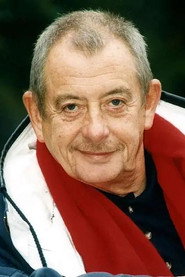 Bernard
It's in case they get caught with their trousers down.

A character in Yes, Minister
Played by Derek Fowlds
 Yes, Minister · 89 quotes
3rd most-quoted character in Yes, Minister: in 34 of its 89 quotes
Most scenes with: James Hacker (22), Sir Humphrey Appleby (19), Annie (2)
Why is it that ministers can't ever go anywhere without their briefs?
BernardIt's in case they get caught with their trousers down.
[How to deal with a nonsensical complaint]
BernardWe can CGSM it.
CGSM?
BernardCivil Service code, Minister. It stands for "Consignment of Geriatric Shoe Manufacturers".
What?
BernardA load of old cobblers, Minister.
I'm not a civil servant. I shall use my own code. I shall write: "Round Objects".
BernardYou remember that letter you wrote "Round Objects" on?
Oh yes.
BernardIt's come back from Sir Humphrey's office. He's commented on it.
What does he say?
BernardWho is Round and to what does he object?
If local authorities don't send us statistics, Government figures will be a nonsense.
Why?
They'll be incomplete.
Government figures are a nonsense, anyway.
BernardI think Sir Humphrey wants to ensure they're a complete nonsense.
Bernard[on the phone] Hello, Graham, it's Bernard. Tell Sir Humphrey that the Minister's just gone walkabout. Yes, yes, AWOL. Well, of course I told him, yes. I know. I think you'd better let him know right away.
[hangs up]
BernardOne... two... three... four... five... six... seven... eight... nine... TEN.
[walks in on the stroke of ten] What's all this about?
BernardThe minister's just left the office, that's all.
That's all? Do you mean he's loose in the building? Why didn't you warn me?
BernardI did advise him, but he is the minister. There's no prohibition against ministers talking to their staff.
Who's he talking to?
BernardPerhaps he was just restless.
If the minister's restless, he can feed the ducks in St James's Park!
BernardYes, Sir Humphrey.
Tell me who the minister's talking to.
BernardWell, surely the minister can talk to anyone?
Bernard... I'm in the middle of writing your annual report. Now, it is not a responsibility that either of us would wish me to discharge whilst I am in a bad temper. Who's the minister talking to?
BernardPerhaps you could help me. I can see that you should know if he calls on an outsider. I fail to see why you should be informed if he just wants to, to take a hypothetical example, to check a point with... Dr Cartwright...
Thank you, Bernard. Must fly.
BernardRoom 4017.
I know!
Bernard, how did Sir Humphrey know I was with Dr Cartwright?
BernardGod moves in a mysterious way.
Let me make one thing perfectly clear: Humphrey is not God, OK?
BernardWill you tell him or shall I?
Get Humphrey to come back here at once.
BernardYes, Minister. [Picks up phone] The Minister wonders if Sir Humphrey could spare time for a meeting sometime in the next few days.
At once.
BernardIn fact, sometime today is really...
At once!
Bernard...Sometime during the next 60 seconds. [hangs up] He's coming round now.
Why? Did he faint?
BernardNo, he's just, you know...
[they both start giggling]
This is serious, Bernard.
BernardYes, I know.
This is no laughing matter.
BernardNo, certainly not.
The question is, how am I going to deal with it?
BernardIn my opinion...
The question was purely rhetorical, Bernard.
Isn't this terrible? Print baseless accusations like this!
Oh, yes, yes, terrible.
Baksheesh, palm-greasing! Good God, we're British!
Absolutely, Minister!
Still, it's not like the FT to print a story like this unless there's something behind it. Is there something behind it, Humphrey?
BernardI think the sports news is behind it.
I want to know the truth, Humphrey.
I don't think you do, Minister.
Will you answer a direct question?
I strongly advise you not to ask a direct question.
Why?
It might provoke a direct answer.
It never has yet.
Bernard, what do YOU know about this? Tell me on your word of honour.
BernardOh, well, I... er... Er, that is... there was. Someone did.
It’s a lot of gossip, that's all. Rumour, hearsay.
Bernard?
BernardWell one of the Kumranis did tell me he'd received...
Hearsay, Minister.
Hearsay?
Yes, Bernard heard him say it.
[Hacker has been offered the job of Transport Supremo.]
Sir Mark thinks there might be votes in it, and I do not intend to look a gift horse in the mouth.
I put it to you, Minister, that you are looking a Trojan horse in the mouth.
You mean if we look closely at this gift horse, we'll find it's full of Trojans?
BernardUm, if you had looked the Trojan Horse in the mouth, Minister, you would have found Greeks inside. Well, the point is that it was the Greeks who gave the Trojan horse to the Trojans, so technically it wasn't a Trojan horse at all; it was a Greek horse. Hence the tag "timeo Danaos et dona ferentes", which, you will recall, is usually and somewhat inaccurately translated as "beware of Greeks bearing gifts", or doubtless you would have recalled had you not attended the LSE.
Yes, well, I'm sure Greek tags are all very well in their way; but can we stick to the point?
BernardSorry, sorry: Greek tags?
"Beware of Greeks bearing gifts." I suppose the EEC equivalent would be "Beware of Greeks bearing an olive oil surplus".
Excellent, Minister.
BernardNo, well, the point is, Minister, that just as the Trojan horse was in fact Greek, what you describe as a Greek tag is in fact Latin. It's obvious, really: the Greeks would never suggest bewaring of themselves, if one can use such a participle (bewaring that is). And it's clearly Latin, not because timeo ends in "-o", because the Greek first person also ends in "-o" – although actually there is a Greek word timao, meaning 'I honour'. But the "-os" ending is a nominative singular termination of a second declension in Greek, and an accusative plural in Latin, of course, though actually Danaos is not only the Greek for 'Greek'; it's also the Latin for 'Greek'. It's very interesting, really.
BernardSo what do we believe in?
At this moment, Bernard, we believe in stopping the minister from informing the Prime Minister.
BernardBut why?
Because once the Prime Minister knows, there will have to be an enquiry, like Watergate. The investigation of a trivial break-in led to one ghastly revelation after another and finally the downfall of a president. The golden rule is don't lift lids off cans of worms. Everything is connected to everything else. Who said that?
BernardThe Cabinet Secretary?
Nearly right. Actually, it was Lenin.
BernardHow do you stop a Cabinet Minister talking to a Prime Minister?
Interesting question. You tell me.
BernardI don't know.
Work it out. You're supposed to be a high flier. Or are you really a low-flier supported by occasional gusts of wind?
[The Minister has received a letter with information about sanctions violations.]
I'm trapped. I can't tell the PM, I can't not tell the PM.
I see.
BernardI was just wondering, Minister, if we may not use the Rhodesia solution.
Bernard! You excel yourself! Of course, Minister, the Rhodesia solution!
What are you talking about?
Oil sanctions, remember? A member of the government was told about the way British companies were sanction-busting.
What did you do?
BernardHe told the Prime Minister.
What did he do?
He told the Prime Minister in such a way that the Prime Minister didn't hear him.
Would you mean I should mumble it or something in the division lobby?
No, Minister, you write a note.
In very faint pencil? Please, be practical.
No, Minister, it's awfully obvious; you write a note which is susceptible to misinterpretation.
Oh, I see. Dear Prime Minister, it has come to my attention that the Italian Red Terrorists are getting hold of British top secret bomb-making equipment—how do you misinterpret that?
You can't.
Well, exactly.
So you don't write that. You use a more circumspect style, and you avoid any mention of bombs, or terrorists, or any of that.
Wouldn't that be rather difficult? Is that what it's all about?
You say—Bernard, write this down—My attention has been drawn, on a personal basis, to information which suggests the possibility of certain irregularities under Section... [snaps fingers]
BernardSection 1 of the Import, Export and Customs Powers Defence Act 1939 C.
Thank you, Bernard. You then go on to suggest that somebody else should do something about it. Prima facie evidence suggests that there could be a case for further investigation; to establish whether or not enquiries should be put in hand. And then you smudge it all over.
Nevertheless, it should be stressed that available information is limited, and relevant facts could be difficult to establish with any degree of certainty.
I see.
Then, if there were an inquiry, you'd be in the clear, and everybody would understand that the busy PM might not have grasped the full implications of such a letter
They certainly would; that's most unclear.
Thank you, Minister. Then you arrange for the letter to arrive at Number 10 on the day the PM leaves for an overseas summit, so there's also doubt about whether it was the PM or the acting PM who read the note. And so the whole thing is written off as a breakdown in communications, everybody's in the clear, and everybody can get on with their business.
BernardIncluding the Red Terrorists.
Exactly.
BernardIf it's our job to carry out government policies, shouldn't we believe in them?
Oh, what an extraordinary idea! I have served 11 governments in the past 30 years. If I'd believed in all their policies, I'd have been passionately committed to keeping out of the Common Market, and passionately committed to joining it. I'd have been utterly convinced of the rightness of nationalising steel and of denationalising it and renationalising it. Capital punishment? I'd have been a fervent retentionist and an ardent abolitionist. I'd have been a Keynesian and a Friedmanite, a grammar school preserver and destroyer, a nationalisation freak and a privatisation maniac, but above all, I would have been a stark-staring raving schizophrenic!
Nothing wrong with subsidising sport. Sport is educational.
We have sex education too. Should we subsidise sex, perhaps?
Bernard[earnestly] Oh, could we?
These quotes come from Wikiquote's Yes, Minister pages and are available under the Creative Commons Attribution-ShareAlike License.