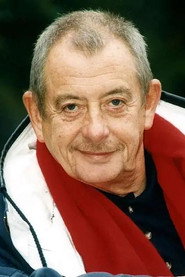
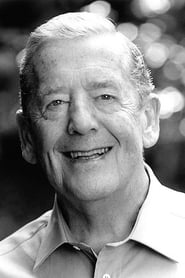
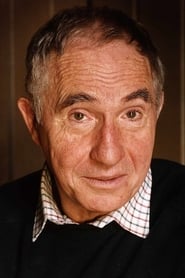
 Sir Humphrey
It takes two to quango, Minister!

A character in Yes, Minister
Played by Nigel Hawthorne
 Yes, Minister · 89 quotes
Most-quoted character in Yes, Minister: in 66 of its 89 quotes
Most scenes with: James Hacker (41), Bernard Woolley (19), Sir Arnold (3)
Sir HumphreyIt takes two to quango, Minister!
Sir HumphreyNow, Minister, if you are going to promote women just because they're the best person for the job, you will create a lot of resentment throughout the whole of the Civil Service!
Sir HumphreyWell, obviously I'm not a trained lawyer or I wouldn't have been in charge of the legal unit!
Sir HumphreyThe ship of state, Bernard, is the only ship that leaks from the top.
Sir Humphrey[calmly] Bernard, subsidy is for art, for culture. [almost furiously] It is not to be given to what the people want! It is for what the people don't want but ought to have!
Sir HumphreyI wonder if I might crave your momentary indulgence in order to discharge a by no means disagreeable obligation which has, over the years, become more or less established practice in government service as we approach the terminal period of the year — calendar, of course, not financial — in fact, not to put too fine a point on it, Week Fifty-One — and submit to you, with all appropriate deference, for your consideration at a convenient juncture, a sincere and sanguine expectation — indeed confidence — indeed one might go so far as to say hope — that the aforementioned period may be, at the end of the day, when all relevant factors have been taken into consideration, susceptible to being deemed to be such as to merit a final verdict of having been by no means unsatisfactory in its overall outcome and, in the final analysis, to give grounds for being judged, on mature reflection, to have been conducive to generating a degree of gratification which will be seen in retrospect to have been significantly higher than the general average.
Sir HumphreyYes, Minister.
But surely the citizens of a democracy have a right to know.
Sir HumphreyNo. They have a right to be ignorant. Knowledge only means complicity in guilt; ignorance has a certain dignity.
[The President of Buranda plans a speech urging the Scots and Irish to fight against "British colonialism".]
Humphrey, do you think it is a good idea to issue a statement?
Sir HumphreyWell, Minister, in practical terms we have the usual six options. One: do nothing. Two: issue a statement deploring the speech. Three: lodge an official protest. Four: cut off aid. Five: break off diplomatic relations. And six: declare war.
Which should be it?
Sir HumphreyWell, if we do nothing, that means we implicitly agree with the speech. If we issue a statement, we'll just look foolish. If we lodge a protest, it'll be ignored. We can't cut off aid, because we don't give them any. If we break off diplomatic relations, then we can't negotiate the oil rig contracts. And if we declare war, it might just look as though we were over-reacting.
How many people do we have in this department?
Sir HumphreyUmmm... well, we're very small...
Two, maybe three thousand?
Sir HumphreyAbout twenty-three thousand to be precise.
TWENTY-THREE THOUSAND! In the department of administrative affairs, twenty-three thousand administrators just to administer the other administrators! We need to do a time-and-motion study, see who we can get rid of.
Sir HumphreyAh, well, we did one of those last year.
And what were the results?
Sir HumphreyIt turned out that we needed another five hundred people.
[There is a government building with a reinforced concrete basement in case of a nuclear war.]
Sir HumphreyThere has to be somewhere to carry on government, even if everything else stops.
Why?
Sir HumphreyWell, government doesn't stop just because the country's been destroyed! I mean, annihilation’s bad enough without anarchy to make things even worse!
You mean you'd have a lot of rebellious cinders.
[One day, Mr. Hacker is taking some paperwork out of his red box and Sir Humphrey has come to see him]
I am still not happy with this report, Humphrey.
Sir HumphreyThen, Minister, we shall be happy to redraft it for you.
You've redrafted it three times already.
That's not absolutely correct, Minister.
Yes, it is, Bernard, I can count. This is the third draft report.
It's quite so, Minister, therefore it's been drafted once and subsequently redrafted twice.
Don't quibble, Bernard.
Sir HumphreyBut we shall be happy to redraft it a third time.
And a fourth and a fifth and a sixth, no doubt. And it still won't say what I want it to say, it'll say what you want it to say, and I want it to say what I want it to say.
What do you want it to say, Minister?
Sir HumphreyWe want it to say what you want it to say.
I'm sure the parliament doesn't want you to say anything you don't want to say.
Stop wittering, Bernard! Six weeks ago, the Think Tank asked us for our evidence on Civil Service overmanning. Three times, I have briefed a group of civil servants in words of one syllable and each time, they've sent back a totally unintelligible report, saying the exact opposite of what I asked them to say.
Sir HumphreyWith respect, Minister, how do you know it says the opposite if it's totally unintelligible?
All I am saying is that the Civil Service is grossly overmanned and must be slimmed down.
Sir HumphreyQuite so. That is what the report says.
No, it doesn't.
Sir HumphreyYes, it does, Minister.
It - it does... Look, what I'm talking about is a phased reduction in the Civil Service of about 200,000 people. Are you going to put that in this report or not?
Sir HumphreyWell, Minister, perhaps if you were to take that draft home with you this weekend and study it, you might find that it does, in fact, say what you want it to say.
And if it doesn't?
Sir HumphreyThen I can only suggest that we redraft it.
Humphrey? Humphrey, sit down. (Humphrey sits in the chair opposite Hacker) Will you give me a straight answer to a straight question?
Sir HumphreyOh, well, Minister, as long as you are not asking me to resort to crude generalisations and vulgar oversimplifications, such as a simple yes or no. I shall do my utmost to oblige.
Is that "yes"?
Sir Humphrey(Takes a deep breath) Yes.
Right. Well, here's the straight question.
Sir HumphreyOh, I thought that was it.
When you give your evidence to the Think Tank, are you going to support my view that the Civil Service is overmanned and feather-bedded, or not? Yes or no? Straight answer.
Sir HumphreyWell, Minister, if you ask me for a straight answer, then I shall say that, as far as we can see, looking at it by and large, taking one time with another in terms of the average of departments, then in the final analysis it is probably true to say, that at the end of the day, in general terms, you would probably find that, not to put too fine a point on it, there probably wasn't very much in it one way or the other. As far as one can see, at this stage.
Is that "yes" or "no"?
Sir HumphreyYes and no.
Suppose you weren't asked for a straight answer?
Sir HumphreyWell then I should play for time, Minister.
Sir HumphreyMinister, Britain has had the same foreign policy objective for at least the last five hundred years: to create a disunited Europe. In that cause we have fought with the Dutch against the Spanish, with the Germans against the French, with the French and Italians against the Germans, and with the French against the Germans and Italians. Divide and rule, you see. Why should we change now, when it's worked so well?
That's all ancient history, surely?
Sir HumphreyYes, and current policy. We had to break the whole thing [the EEC] up, so we had to get inside. We tried to break it up from the outside, but that wouldn't work. Now that we're inside we can make a complete pig's breakfast of the whole thing — set the Germans against the French, the French against the Italians, the Italians against the Dutch... The Foreign Office is terribly pleased; it's just like old times.
But surely we're all committed to the European ideal?
Sir Humphrey[chuckles] Really, Minister.
If not, why are we pushing for an increase in the membership?
Sir HumphreyWell, for the same reason. It's just like the United Nations, in fact; the more members it has, the more arguments it can stir up, the more futile and impotent it becomes.
What appalling cynicism.
Sir HumphreyYes... We call it diplomacy, Minister.
[The Foreign Secretary explains the Napoleon prize.]
Yes, it's a NATO award given once every five years: gold medal, big ceremony in Brussels, £100 000. The PM's the front runner this time. It's for the statesman who's made the biggest contribution to European unity.
Sir HumphreySince Napoleon. That is if you don't count Hitler.
Let's face it, all your functions could be subsumed by other departments. Jim Hacker will win through with a thoroughly public-spirited, self-sacrificing policy. The PM will probably kick him upstairs: Lord Hacker of Kamikaze. [chuckles]
Sir HumphreyI hardly think that's funny, Daniel. Or likely.
But why not? I mean, he ran the leadership campaign against the PM, didn't he? This could be the PM's masterstroke! In one fell swoop: approbation, elevation, and castration. You know the PM's motto: in defeat, malice. In victory, revenge.
These quotes come from Wikiquote's Yes, Minister pages and are available under the Creative Commons Attribution-ShareAlike License.