[voiceover] Any first year med student knows that an increased heart rate is a sign of trouble. A racing heart could indicate anything from a panic disorder to something much, much more serious. A heart that flutters, or one that skips a beat, could be a sign of secret affliction or it could indicate romance which is the biggest trouble of all.
[voiceover] It seems we have no control whatsoever over our own hearts. Conditions can change without warning. Romance can make the heart pound just like panic can. And panic can make it stop cold in your chest. It’s no wonder doctors spend so much time trying to keep the heart stable, to keep it slow, steady, regular to stop the heart from pounding out of your chest from the dread of something terrible or the anticipation of something else entirely.
[voiceover] Every patient’s story starts the same way. It starts with them being fine, it starts in the before. They cling to this moment, this memory of being fine, this before, as though talking about it may somehow bring it back. But what they don't realize is that the fact they're talking about it to us, their doctors, means there's no going back. By the time they see us, they're already in the after. And while every patient's story starts the same way, how the story ends depends on us, on how well we diagnose and treat. We know the story hinges on us and we all want to be the hero.
[voiceover] There's this thing that happens when people find out you're a doctor. They stop seeing you as a person and begin to see you as something bigger than you are. They have to see us that way, as gods, otherwise we're just like everyone else, unsure, flawed, normal. So we act strong, we remain stoic. We hide the fact that we're all too human.
[voiceover] Patients see us as gods or they see us as monsters. But the fact is, we're just people. We screw up, we lose our way. Even the best of us have our off days. Still we move forward. We don't rest on our laurels or celebrate the lives we've saved in the past. Because there's always some other patient that needs our help. So we force ourselves to keep trying, to keep learning. In the hope that, maybe, someday we'll come just a little bit closer to the gods our patients need us to be.
[voiceover] Every surgeon I know has a shadow. A dark cloud of fear and doubt that follows even the best of us into the OR. We pretend the shadow isn't there hoping that if we save more lives, master harder techniques, run faster and farther it will get tired and give up the chase but like they say... you can't outrun your shadow.
[voiceover] Every surgeon has a shadow. And the only way to get rid of a shadow is to turn off the lights, to stop running from the darkness and face what you fear, head on.
[voiceover] Surgeons aren't known for being warm and cuddly. They're arrogant, impatient, mean as often as not. You'd think they wouldn't have friends 'cuz who could stand them? But surgeons, are like a bad cold. Nasty, but persistent. Surgeons: nasty, aggressive, unstoppable, just the kind of people you want on your side when you're really screwed.
[voiceover] Practicing medicine doesn't lend itself well to the making of friends. Maybe because life and mortality are in our faces all the time. Maybe because in staring down death everyday, we're forced to know that life, every minute, is borrowed time. And each person we let ourselves care about is just one more loss somewhere down the line. For this reason, I know some doctors who just don't bother making friends at all. But the rest of us, we make it our job to move that line. To push each loss as far away as we can.
[voiceover] Defeat isn't an option. Not for surgeons. We don't back away from the table til the last breath's long gone. Terminal's a challenge, life threatening's what gets us out of bed in the morning. We're not easily intimidated, we don't flinch, we don't back down and we certainly don't surrender, not at work anyway.
[voiceover] To do our jobs, we have to believe defeat is not an option. That no matter how sick our patients get, there's hope for them. But even when our hopes give way to reality, and we finally have to surrender to the truth, it just means we've lost to today's battle, not tomorrow's war. Here's the thing about surrender, once you do it, actually give in, you forget why you were even fighting in the first place.
[voiceover] Remember when we were little and we would accidentally bite a kid on the playground. Our teachers would go, “Say you're sorry”, and we would say it, but we wouldn't mean it because the stupid kid we bit, totally deserved it. But as we get older, making amends isn't so simple. After the playground days are over you can't just say it, you have to mean it. Of course when you become a doctor, sorry is not a happy word. It either means you're dying and I can't help. Or it means this is really going to hurt.
[voiceover] As doctors we can't undo our mistakes, and we rarely forgive ourselves for them, but it's a hazard of the trade. But as human beings we can always try to do better, to be better, to right a wrong even when it feels irreversible. Of course, "I'm sorry" doesn't always cut it. Maybe because we use it so many different ways: as a weapon, as an excuse. But when we are really sorry. When we use it right. When we mean it. When our actions say what words never can. When we get it right, "I'm sorry" is perfect. When we get it right, "I'm sorry" is redemption.
[voiceover] When something begins, you generally have no idea how it's going to end. The house you're going to sell becomes your home, the roommates you were forced to take in become your family and the one night stand you were determined to forget becomes the love of your life.
[voiceover] We spend our whole lives worrying about the future, planning for the future, trying to predict the future, as if figuring it out will somehow cushion the blow. But the future is always changing. The future is the home of our deepest fears and our wildest hopes. But one thing is certain when it finally reveals itself, the future is never the way we imagined it.
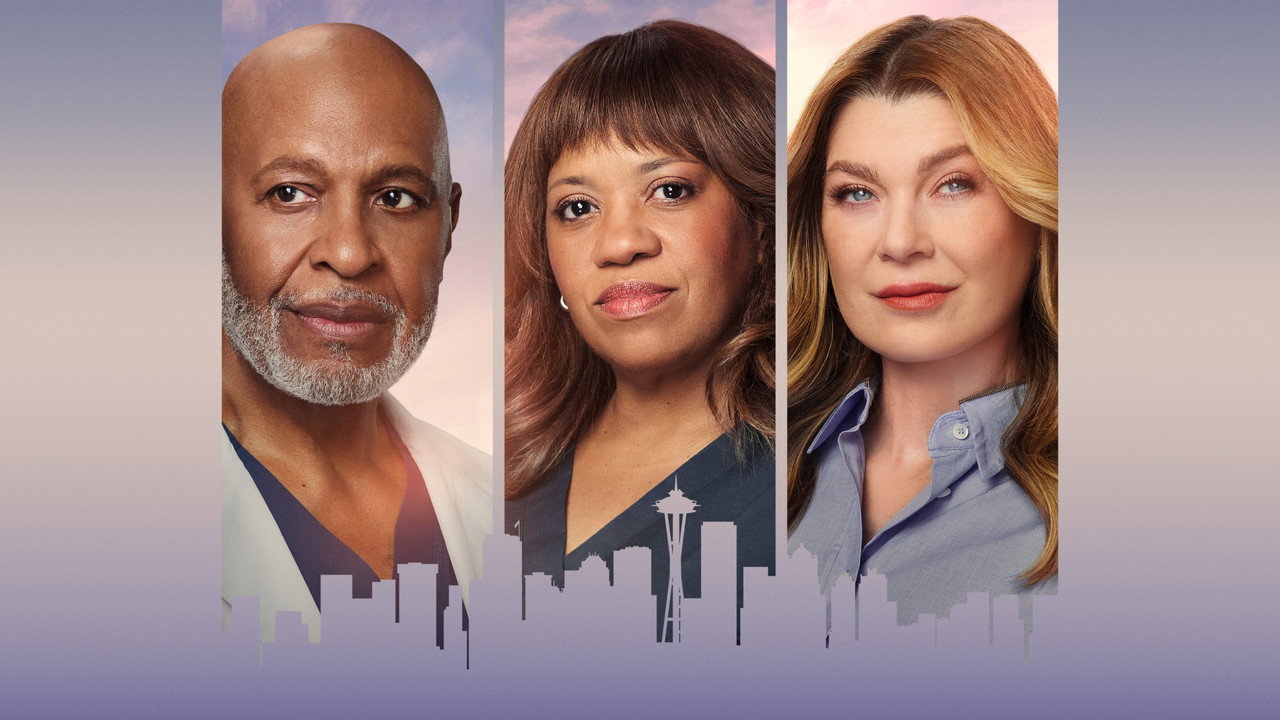
 Grey's Anatomy · 1,393 quotes
 Meredith