[voice over] In some residency programs, graduating surgeons get a wooden chair, emblazoned with the emblem of their program. When those residents become attendings, the chair usually goes in their office, where it collects dust for the rest of their careers. You give your program years of your life, your sweat, your tears, and in my case, at least, your blood, and your program gives you a chair. I suppose it's a nice tradition, if you're into that sort of thing. And if you want a constant reminder of the hell you went through to get here.
[voice over] Traditions have never really been my thing. But at their best, they help us remember who we are, where we're from, and those who came before us. They give us something to pass on to future generations. 'Cause if you don't know where you're from, it's kind of hard to know where you're going. Unless, of course, where you're going is home.
[voice over] When we give test results to patients, we often say, "Normal". We look and analyze numbers within ranges, highs and lows. Because if history has shown us anything, one person's normal is another's complete chaos.
[voice over] Scientists have published studies about how the practice of gratitude improves mental and physical health. A daily gratitude practice reduces depression and increases happiness. Gratitude enhances empathy, which helps build positive relationships. It even lowers blood pressure. If giving thanks is so good for you, why do so many people struggle doing it?
[voice over] Why do we only designate one day a year to give thanks? After everything we've been through, why not celebrate the good every day? Hug your loved ones. Smile at a stranger. Choose kindness. Someone might do it in return.
[voice over] In the late 16th century, a father-son team made a groundbreaking discovery. They found that when they put lenses at the opposite ends of a tube, it enlarged objects. Their invention was the first compound microscope. And as basic as it was, their invention was a game changer for science and medicine.
[voice over] The invention of the microscope turned the scientific community on its head. It gave scientists a whole new way of looking at things. For the first time, they could see cells and things they couldn't with the naked eye. The simple use of curved glass to bend and refract light revolutionized how we see the world. In many ways, it's not all that different from everyday life. Sometimes seeing life through a different lens opens a new world of possibilities.
[voice over] The way kids feel at Christmas is a pretty close equivalent to the way surgeons feel walking into an OR. It's a complicated mix of anxiety and excitement that makes it almost impossible to sleep. The anticipation is the best and worst part. Will this go my way? Will I get what I want? Will my patient live? Will they heal? Is Santa real? Stepping into an OR is its own kind of magic. The possibility that on this day, you might save a life or end it.
[voice over] I often ask my kids do they prefer Christmas Eve or Christmas Day? I go back and forth on that question. As a person, I prefer Christmas Eve, when life is all possibility falling asleep with unopened presents under a tree, filled with excitement for tomorrow. But as a surgeon, I prefer Christmas Day the point where possibility meets reality. And soon you'll see if it all worked. But whichever you prefer I can promise you this: eventually, the holiday is over.
[voice over] The Apgar test. The Whipple procedure. The DeBakey clamp. So many of the tools we use in our hospitals every day are named after the people who invented them. Even diseases used to be named after the people who discovered them. But a medical board in the 1970s discontinued that practice claiming that no one could "own" a sickness. As altruistic as the profession is, doctors are human. If we do something that could change the face of medicine, we want our name on it.
[voice over] When people hear our names, what will they remember? What did we leave behind? Did we blaze trails? Did we guide a new generation? Did we bestow all the wisdom we could? Have we paved a legacy? Maybe instead of wanting to be known for what we've done let's be known for who we are.
[voice over] Many visits to the doctor start with taking your blood pressure. It's a vital indicator of your health. But within the human body, there are many pressurized systems, and each has its own threshold and consequence for pressure. Too much pressure on the lungs can cause them to collapse to 1/10 of their size. Skulls can only take so much pressure before the brain herniates into the spinal cord. Enough pressure on the limbs can cut off blood flow and kill them. The amount of pressure may vary, but every system has a breaking point.
[voice over] When too much pressure builds within your body, you might need a surgeon to relieve it. We drill burr holes, place chest tubes, cut open limbs. In life, relieving pressure's not always as easy. But it's just as important. Too much stress takes a toll on our mental and physical health. So go for a walk. Meet up with a friend. Dance it out. Seek out the moments of joy that keep us alive.
[voice over] When a patient goes into cardiac arrest, we follow a specific set of protocols to resuscitate them. Start with CPR, give oxygen, assess heart rhythm to determine if the patient needs to be shocked. If needed, push epinephrine every three to five minutes. Consider an advanced airway and need to administer additional medications. Then check the pulse and start the cycle all over again. CPR, shock, meds, pulse check sometimes for hours. Until, hopefully, you change the course and save a life.
[voice over] Researchers studied patient codes at hundreds of hospitals. They found patients had increased survival rates at hospitals with longer attempts at resuscitation. Of course, there are limits on how much we can do. As hard as we try, not every patient has a happy ending. Sometimes we just have to call it.
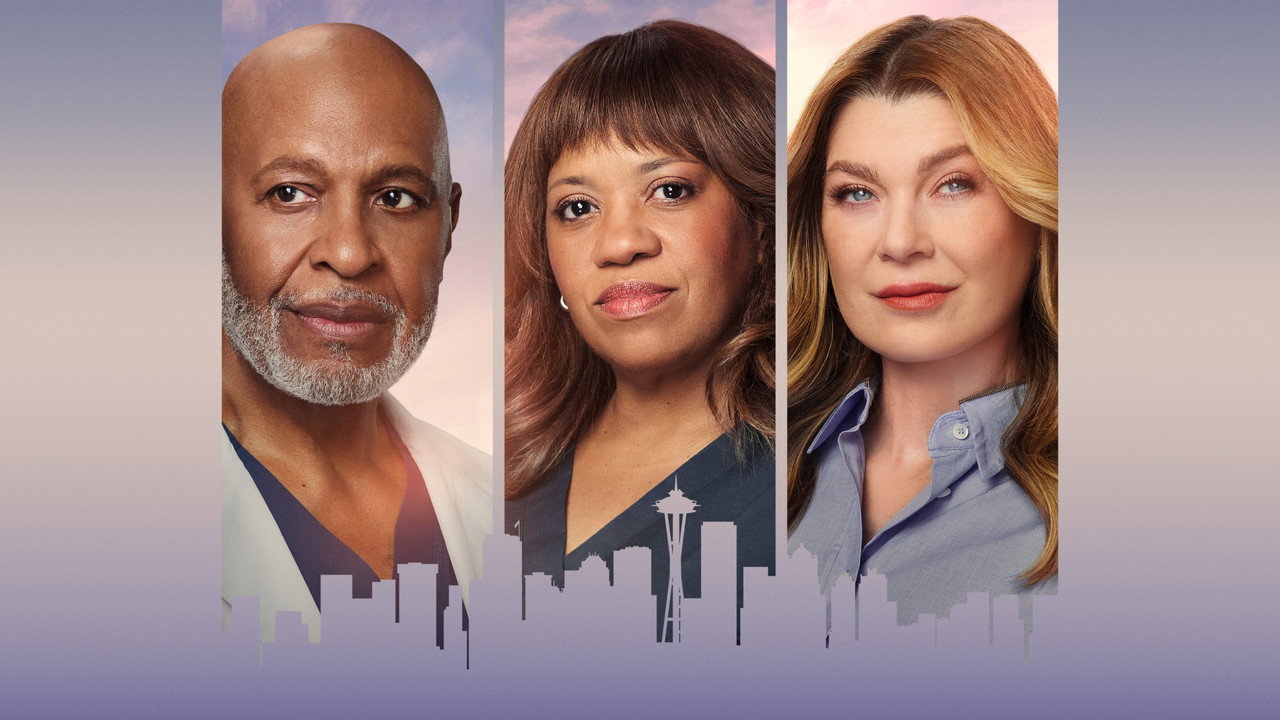
 Grey's Anatomy · 1,393 quotes
 Meredith