[Voice Over] My mother said, tell the truth! Just tell the best version of the truth you can. Because the truth is going to come out some time. And the one thing you can't do with the truth, is hide from it. Because the truth is gonna come looking. Until it finds you. "
[Voice Over] Everyday we're surrounded by people who ask how we're doing. But when surgeons ask how you're doing, we generally care about your answer. Your answer to "How are you doing?" Tells us how good of a job we're doing at taking care of you. Unfortunately, caretaking outside of medicine is usually more complicated. "
[Voice Over] Surgeons are trained to provide care for others. Some biologists believe it's human nature, the desire to help. Scientists believe we're biologically programmed to empathize. I think it's one of the reasons our species has lasted this long. We have an innate instinct to support each other. You can only take care of yourself for so long. Because lets face it, some problems are way too big to carry on our own. "
[Voice Over] The poet Octavio Paz once wrote, the Mexican is familiar with death. Jokes about it, caresses it, sleeps with it, celebrates it. I can relate. But in a hospital, death isn't celebrated. It's avoided at all costs. And when it comes, it's clinical, almost routine. But still with all that practice. Even surgeons are surprised by death. Especially when it happens to the ones we love. "
[Voice Over] Every religion, every country, every culture. Death means something to all of us. We all have different ideas about how to honour the dead. Different ideas on how to grieve. Different ways of moving on. Well, I may not be an expert, but I do have some experience with losing people I love. And I say, that right way to grieve. Is however the hell you want! "
[Opening Voice Over] Time is a strange thing. When you're waiting for something good to happen, it can feel like time is dragging on. But when you want it to slow down, it goes by in the blink of an eye. The odd part is time isn't real. It's a concept imagined by scientists based on the imperfect movement of the earth around the sun. So why do we put so much importance on something that's just a theory? Because it's all we have.
[Ending Voice Over] there's never enough time. Work, kids, life, death. Something always cuts our time short. So our best bet is to make the most of the time we have. Or make up for lost time. But sometimes, if we're really lucky ...time stand still.
[voice over] 'I needed more time'. I can't tell you how often I've heard surgeons say this after losing a patient. We think in time, we talk in time Doses per day. Life expectancy. Take two and call me in the morning. And what is a heartbeat if not a ticking clock? A clock that's always counting down.
[voice over] Our brains imagine futures we'll never see. We're struggling to overcome a simple, inescapable truth everything ends. But for every clock that counts down, another restarts. Time goes on, and when one thing ends, something new always begins.
[voice over] We give children stickers and lollipops after they visit the doctor. We congratulate them for putting on a brave face. "Here's some candy, kid. Try to smile". We do it to adults, too. It's considered impolite to discuss your cancer diagnosis at a dinner party. You're supposed to smile, make small talk, suck on the invisible lollipop. Because for some reason, someone decided a long time ago that naming pain is impolite that hiding it and hiding from it makes more sense. It doesn't. It's a lie, a lie that both comforts and destroys us.
[voice over] When I was a kid, I would wake up every morning in the winter and immediately open the curtains to see if it was snowing. Where are you, where are you. And it usually was. It was Boston. Everyone loves a snow day. Except for one person. My mother. She always said the same thing 'Meredith, surgeons don't get snow days'. She was right. We don't.
[voice over] Right after a storm, I would run outside. Whether it was the air or the fresh blanket of snow it always felt magical. Or new. But as beautiful as it is, the snow starts to melt. And you're suddenly standing in dirty slush frozen and unable to feel anything at all. But after enough time, even that disappears. The ground thaws, the days get longer, and though you could never imagine it, you start to feel again. It surprises me every time.
[voice over] There's an old joke doctors like to tell. "Hey, Doc, it hurts when I go like this." And the doctor says, "Well, don't go like this." It's a lame joke, but it's nonetheless true. As human beings, we can't help but want to follow our instincts to follow our guts our primal urges no matter how much it may hurt.
[voice over] We hold onto hope, thinking one small detail, one tiny piece of information will somehow make things right, make it different, make it okay stop the world from spinning off its axis. When the truth is there's really no good way to say goodbye.
[voice over] Your body contains approximately 35 trillion cells, and every one of them is constantly being pulled down to earth by gravity. When you're lying down, gravitational forces are spread between the thorax, abdomen, and legs. Stand up too fast, and blood rushes downward, away from the brain. It causes dizziness or even fainting. It's a minor miracle our cells get anything done at all. Because the human body has to perform even the simplest of tasks, either under unimaginable pressure.
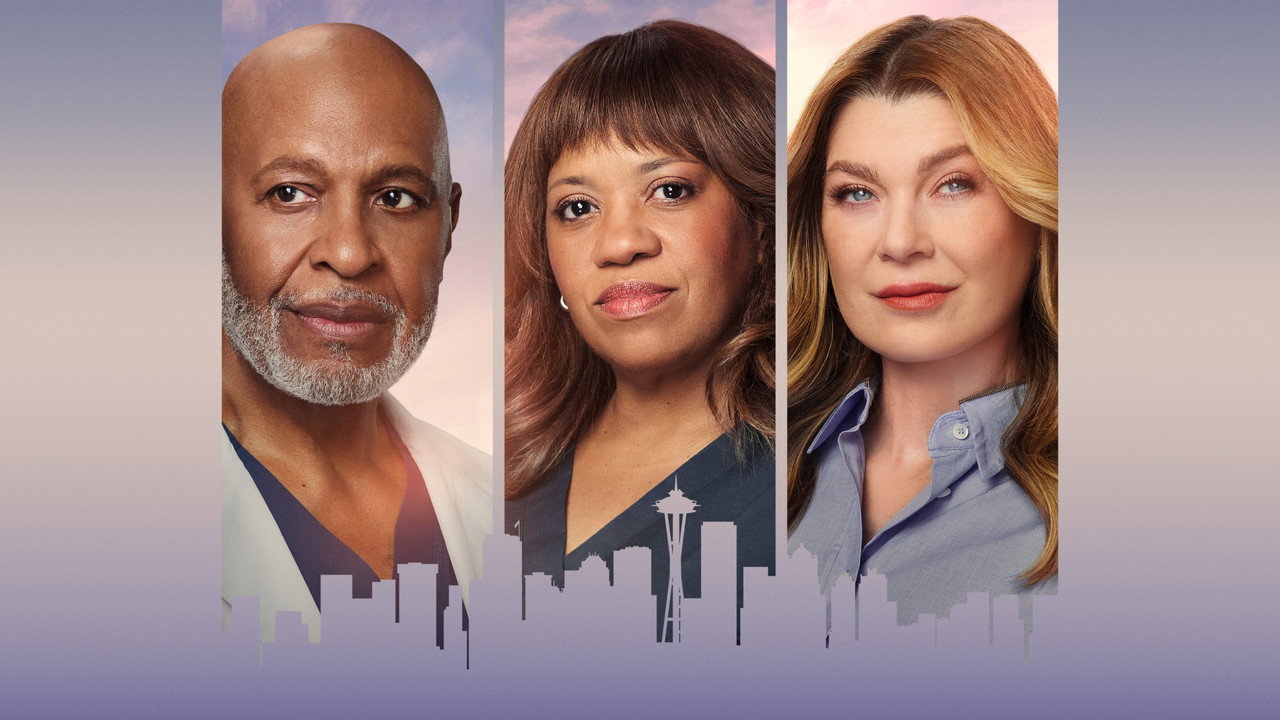
 Grey's Anatomy · 1,393 quotes
 Meredith