 Sir Humphrey
The people are ignorant and misguided.

Humphrey, it's the people who elected me.
Sir Humphrey[smiles and nods]
S2 E4 The Greasy Pole
View quote →
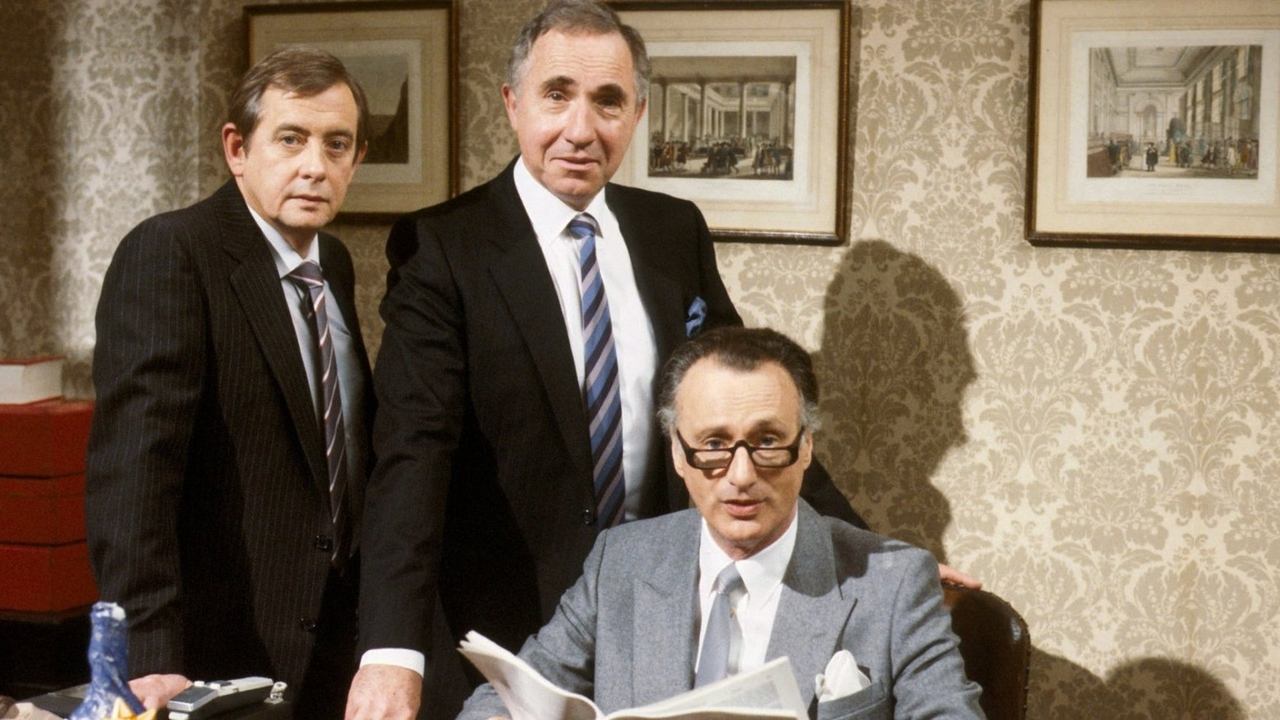
A character in Yes, Minister
Played by Nigel Hawthorne
 Yes, Minister · 89 quotes
Most-quoted character in Yes, Minister: in 66 of its 89 quotes
Most scenes with: James Hacker (41), Bernard Woolley (19), Sir Arnold (3)
Sir HumphreyThe people are ignorant and misguided.
Humphrey, it's the people who elected me.
Sir Humphrey[smiles and nods]
Europe is a community of nations, dedicated towards one goal.
Sir Humphrey[laughs moderately]
May we share the joke, Humphrey?
Sir HumphreyOh Minister, let's look at this objectively. It is a game played for national interests, and always was. Why do you suppose we went into it?
To strengthen the brotherhood of free Western nations.
Sir HumphreyOh really. We went in to screw the French by splitting them off from the Germans.
So why did the French go into it, then?
Sir HumphreyWell, to protect their inefficient farmers from commercial competition.
That certainly doesn't apply to the Germans.
Sir HumphreyNo, no. They went in to cleanse themselves of genocide and apply for readmission to the human race.
I never heard such appalling cynicism! At least the small nations didn't go into it for selfish reasons.
Sir HumphreyOh really? Luxembourg is in it for the perks; the capital of the EEC, all that foreign money pouring in.
Very sensible central location.
Sir HumphreyWith the administration in Brussels and the Parliament in Strasbourg? Minister, it's like having the House of Commons in Swindon and the Civil Service in Kettering!
[The Minister and his subordinates discuss the rumoured Cabinet reshuffle.]
How does Basil Corbett know about it when we don't?
Sir HumphreyPerhaps he has the PM's ear.
Yes, he is in the PM's pocket.
Then the PM must have rather a large ear.
[Sir Humphrey claims he would be deeply sorry to see the Minister leave the DAA.]
Yes, I suppose we have got rather fond of one another. In a way.
Sir Humphrey[laughs] In a way, yes!
[jokingly] Like a terrorist and his hostage!
Which one of you is the terrorist?
[each points at the other] He is.
Sir HumphreyDidn't you read the Financial Times this morning?
Never do.
Sir HumphreyWell, you're a banker. Surely you read the Financial Times?
Can't understand it. Full of economic theory.
Sir HumphreyWhy do you buy it?
Oh, you know, it's part of the uniform. It took me thirty years to understand Keynes' economics. Then when I'd just cottoned on, everyone started getting hooked on these new monetarist ideas, you know, I Want To Be Free by Milton Shulman.
Sir HumphreyMilton Friedman.
Why are they all called Milton? Anyway, I've only got as far as Milton Keynes.
Sir HumphreyMaynard Keynes.
I'm sure there's a Milton Keynes.
Sir HumphreyYes, there is, but it's... [Humphrey gives up]
[Standard excuses when faced with serious allegations]
Sir HumphreyThere's the excuse we used for the Munich Agreement: it occurred before certain important facts were known and couldn't happen again.
What important facts?
Sir HumphreyWell, that Hitler wanted to conquer Europe.
I thought everybody knew that.
Sir HumphreyNot the Foreign Office.
[Why has the Minister been invited to Number 10?]
Sir HumphreyPerhaps it is just for a drink, Minister.
Don't be silly, Humphrey. They don't ask you to Number 10 for a drink just because they think you're thirsty!
Sir HumphreyIt's not for me to comment on government policy. You must ask the Minister.
Look, Sir Humphrey, whatever we ask the Minister, he says is an administrative question for you, and whatever we ask you, you say is a policy question for the Minister. How do you suggest we find out what is going on?
Sir HumphreyYes, yes, yes, I do see that there is a real dilemma here. In that, while it has been government policy to regard policy as a responsibility of Ministers and administration as a responsibility of Officials, the questions of administrative policy can cause confusion between the policy of administration and the administration of policy, especially when responsibility for the administration of the policy of administration conflicts, or overlaps with, responsibility for the policy of the administration of policy.
Well, that's a load of meaningless drivel. [pause] Isn't it?
Sir HumphreyIt's not for me to comment on government policy. You must ask the Minister.
Life is so much easier when ministers think they've achieved something; it stops them fretting, and their little temper tantrums.
Sir HumphreyYes, but now he wants to introduce his next idea.
A minister with two ideas? I can't remember when we last had one of those.
Sir Humphrey[talking about nuclear fallout shelters] Well, you have the weapons; you must have the shelters.
I sometimes wonder why we need the weapons.
Sir HumphreyMinister! You're not a unilateralist?
I sometimes wonder, you know.
Sir HumphreyWell, then, you must resign from the government!
Ah, no, no, no, no, no, no, no. I'm not that unilateralist! Anyway, the Americans will always protect us from the Russians, won't they?
Sir HumphreyRussians? Who's talking about the Russians?
Well, the independent deterrent.
Sir HumphreyIt's to protect us against the French!
The French?! But that's astounding!
Sir HumphreyWhy?
Well they're our allies, our partners.
Sir HumphreyWell, they are now, but they've been our enemies for the most of the past 900 years. If they've got the bomb, we must have the bomb!
If it's for the French, of course, that's different. Makes a lot of sense.
Sir HumphreyYes. Can't trust the Frogs.
You can say that again!
Sir HumphreyIf local authorities don't send us statistics, Government figures will be a nonsense.
Why?
Sir HumphreyThey'll be incomplete.
Government figures are a nonsense, anyway.
I think Sir Humphrey wants to ensure they're a complete nonsense.
[on the phone] Hello, Graham, it's Bernard. Tell Sir Humphrey that the Minister's just gone walkabout. Yes, yes, AWOL. Well, of course I told him, yes. I know. I think you'd better let him know right away.
[hangs up]
One... two... three... four... five... six... seven... eight... nine... TEN.
Sir Humphrey[walks in on the stroke of ten] What's all this about?
The minister's just left the office, that's all.
Sir HumphreyThat's all? Do you mean he's loose in the building? Why didn't you warn me?
I did advise him, but he is the minister. There's no prohibition against ministers talking to their staff.
Sir HumphreyWho's he talking to?
Perhaps he was just restless.
Sir HumphreyIf the minister's restless, he can feed the ducks in St James's Park!
Yes, Sir Humphrey.
Sir HumphreyTell me who the minister's talking to.
Well, surely the minister can talk to anyone?
Sir HumphreyBernard... I'm in the middle of writing your annual report. Now, it is not a responsibility that either of us would wish me to discharge whilst I am in a bad temper. Who's the minister talking to?
Perhaps you could help me. I can see that you should know if he calls on an outsider. I fail to see why you should be informed if he just wants to, to take a hypothetical example, to check a point with... Dr Cartwright...
Sir HumphreyThank you, Bernard. Must fly.
Room 4017.
Sir HumphreyI know!
Sir HumphreyThe identity of the official whose alleged responsibility for this hypothetical oversight has been the subject of recent discussion is not shrouded in quite such impenetrable obscurity as certain previous disclosures may have led you to assume; but not to put too fine a point on it, the individual in question is, it may surprise you to learn, one whom your present interlocutor is in the habit of defining by means of the perpendicular pronoun.
I beg your pardon?
Sir HumphreyIt was... I.
How am I going to explain the missing documents to the Mail?
Sir HumphreyWell, this is what we normally do in circumstances like these.
[passes Hacker a memo]
"This file contains the complete set of papers, except for a number of secret documents, a few others which are part of still active files, some correspondence lost in the floods of 1967..." Was 1967 a particularly bad winter?
Sir HumphreyNo, a marvellous winter. We lost no end of embarrassing files.
"...Some records which went astray in the move to London and others when the War Office was incorporated in the Ministry of Defence, and the normal withdrawal of papers whose publication could give grounds for an action for libel or breach of confidence or cause embarrassment to friendly governments". That's pretty comprehensive. How many does that normally leave for them to look at?
How many does it actually leave? About a hundred?... Fifty?... Ten?... Five?... Four?... Three?... Two?... One?... Zero?
Sir HumphreyYes, Minister.
These quotes come from Wikiquote's Yes, Minister pages and are available under the Creative Commons Attribution-ShareAlike License.