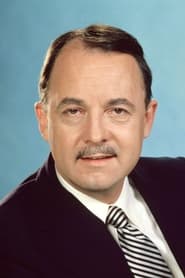
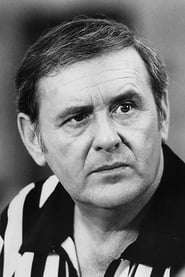
Most-quoted character in Magnum, P.I.: in 141 of its 180 quotes Most scenes with: Jonathan Higgins (36), T.C (13), Rick (13)
Lines by Thomas Magnum 80
Magnum
[narrating] Hawaiian sunsets are among the most breathtakingly beautiful in the world. Grandly vibrant, uniquely different every day, they paint a palette with boundaries that stop only at the horizons of one's imagination. However, when the sun goes down, it looks the same all over the world. Whether you're in Milwaukee or Maui, it's dark.
[narrating] After three days of surveillance, I was familiar with the rhythm of the street. At nine in the morning, those about to be sacrificed to the Hawaiian gods of sun, sea, and sand were making their ritualistic trek to the beach. I knew from experience that very few would return with their skin. At noon, the late risers and the serious souvenir hunters were prowling about, snatching up bargain buys on plastic hula skirts and cheap coral beads. At three-fifteen I got my afternoon treat. I called her Olga, for obvious reasons. The cops are pretty good about keeping hookers off the street during the day, but, I guess when you're as big as Olga, you can work any time you want. By sunset the last of the lobsters were returning from the beach, which meant my day was nearly over and all I had to show for it was a sore butt, and a case of heartburn.
[narrating] I get these feelings... I guess a... I call them my "little voice". I know that sounds dumb, but it's like an early warning system, or a conscience. Or maybe, it's just a way of communicating to myself how I really feel about something deep down. I think we all have something like that. I think we communicate those deep down feelings with others that we care about and it's not just by talking about it. This doesn't make any sense, I'm sorry. I guess what I mean is if there's a real connection with somebody you care about ultimately they hear you and that's why I think T.C.'s gonna hear us.
[narrating] I've always loved John O'Hara's story of the servant who saw death coming towards him in a Baghdad marketplace. So he fled to Samarra only to learn that it was there that death had an appointment with him. Laura felt I had an appointment in Samarra. I had to find out if she was right.
[narrating] A few vital statistics that explain why paradise is called paradise: there are three-hundred and twenty-six days of sunshine each year, an annual average temperature of eighty-six degrees, billions and billions of gallons of blue Pacific, and one Orville 'Rick' Wright, who will bet on anything.
[narrating] Here in paradise, there are at least three different ways of looking at time; There's the traditional mainland kind of time – people say "let's meet at eight o'clock", and that's more or less what they mean. Then there's Hawaiian time, which is a lot more... flexible – eight o'clock may mean seven... or nine... or not at all... depending on an infinite variety of factors. However, even in paradise, there's also a time-frame which seems to operate on a mysterious circadian rhythm all it's own – bureaucratic time; Roughly, that translates into "stand in line until we're ready for you, and then do it our way, or not at all.
[narrating] There's something hypnotic about the climate in Hawaii: every day it's sunny and 80°; every day there are gentle trade winds to take the edge of the humidity; every day--until the Kona Winds come up. The Kona Winds come from the south, from somewhere in the vastness of the Pacific Ocean, as they travel toward the unprotected chain of islands sitting vulnerable in the huge expanse of water, they pick up power, and speed, and force, finally crashing into the scattered pits of land. But the Kona Winds do more than whip the sea into a frenzy, they stir the blood and tear at the emotions, thrusting even temperate men into destinies they may later regret. I've always felt drawn to the land's end to watch the winds come in, as if I were somehow... part of the drama.
[narrating] I'm not really sure which kind of private investigator I am. The Holmesian-type with the constant deductive mind, or one with a Marlowe-type intuitive sense of the darker side of human nature? Hopefully a combination of both. At any rate, it doesn't matter. Not when you have a "little voice". I don't know, maybe a gently nagging "little voice" is just another way of adding what you know, to what you feel, but right now mine wasn't "gently nagging". It was screaming.
[narrating] When counting the assets of paradise, you have to start with the geographical diversity. Take the Big Island of Hawaii, for instance. Twenty miles in either direction and you've been to the dark hills of the Dakotas, the ranches of Texas, or even the Moon from the beginning of time. Impressive. I like the idea of working on the Big Island. What I didn't like was the vague job description, but the one detail I was told had me on the next plane. Whatever the investigation, I'd have a chance to do something I'd never get to do on a case back home. You can't ride a horse on Hotel Street.
[narrating] Even when I was nine years old and my Grandpa took me to the carnival at the county fair, I found myself asking too many questions. Questions like, in the basketball shooting concession, "why was the ball so full of air that it would bounce off the too-small rim, and there goes your quarter?" Or, "why did the beautiful blond lady in the 'dollar-a-kiss' booth smell like a distillery from twenty feet away?" Or, "how come the biggest stuffed animals you could possibly win in the shooting gallery always had an inch of dust on them?" And now, a lot of years later, "who would want to make a murder out of a sideshow?"
[narrating] Sometimes I think maybe I've spent too long in paradise. I sort of take it for granted, like pizza. I mean, while I find a lot of security in the knowledge that paradise and pizza are always there; it's too easy to get complacent. Pepperoni or sausage? Perfect sunrise or a perfect rainbow? Why not just have all of the above, today? Now, I can deprive myself of pizza for a week and appreciate it again, but paradise... it's always at my door. And while it can be very pleasant, it can also be very predictable.
[narrating] One thing I've noticed over the years. Usually people hire private investigators because they can't unravel the puzzle themselves. Their emotions are too involved. They need someone who is detached, analytical, uninvolved. And that's what I've always tried to give them. But somehow, that all became very difficult when the missing person was Rick and the client was me.
[narrating] When I was 14 years old, my grandfather took me crabbing. Now, crabbing's a lot different from trout fishing. See, you tie the bait on the line, you drop it in the water, and when you feel the crab crawl up on the bait, and start nibbling away, you have to slowly raise the line to the surface and then net him as fast as you can. The only trouble is, by the time you can see the crab... he can see you. And nine times out of ten, he'll scuttle right back off that bait and disappear into the ocean. Now I guess that's what I always liked about it, the crab had as good a chance of a free meal as you did. But the best thing about crabbing, was that it taught you patience, concentration, and the second sense of when the time was right to sit, and wait it out.
[narrating] After the first time I was wounded in Vietnam, I'd noticed a weird series of reactions to being shot. I'd wondered if anybody had ever written them down like Elisabeth Kübler-Ross' "Stages of Death". First, there's denial. Then comes a giddy kind of relief, shock and surprise at still being alive. All the senses working together in Technicolor and Hi-Fi at the joy of actually having survived. And then, the paranoia sets in. If it's happened once, it can happen again. Suddenly, every sound is an approaching enemy, every smell a lethal gas, and no way of knowing whether it's a mind game, or a clear and present danger. And no way of stopping the heart racing, the palms sweating, until the paranoia stage has slipped into revenge.

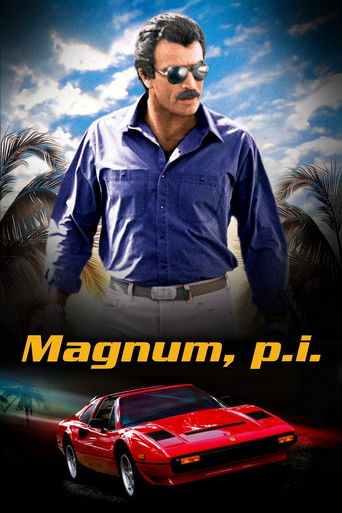 Magnum, P.I. · 180 quotes
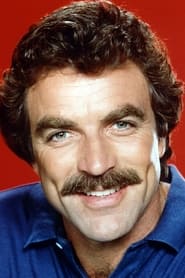 Magnum