For African Americans, it remained the worst of times. Eight-hundred and fifty-eight Blacks were lynched during the decade. Separate but unequal laws held them in virtual bondage in the South, and helped drive thousands north to already dangerously-crowded cities in search of a better life. The National Pastime too had nothing to offer; Blacks were still barred from playing in organized white baseball.

All S1
S1 E15Unfinished Business
In 1901, a twenty-year-old elementary school teacher named Branch Rickey managed to scrape together enough money to enter Ohio Wesleyan University. His mother sent him a dollar bill each month to help him out, but he always returned it. Rickey was determined to make something of himself and to do it on his own. To pay his school bills, he helped coach the Ohio Wesleyan Baseball Team, urging his players on with a booming voice no one ever forgot. "Rickey is one of the noisiest men who ever played on the field," wrote a campus sportswriter. When the team stopped in South Bend, Indiana, a hotel manager refused to allow the team’s star, a catcher named Charlie Thomas [a black man], to register. The memory of the player’s humiliation never left Branch Rickey.
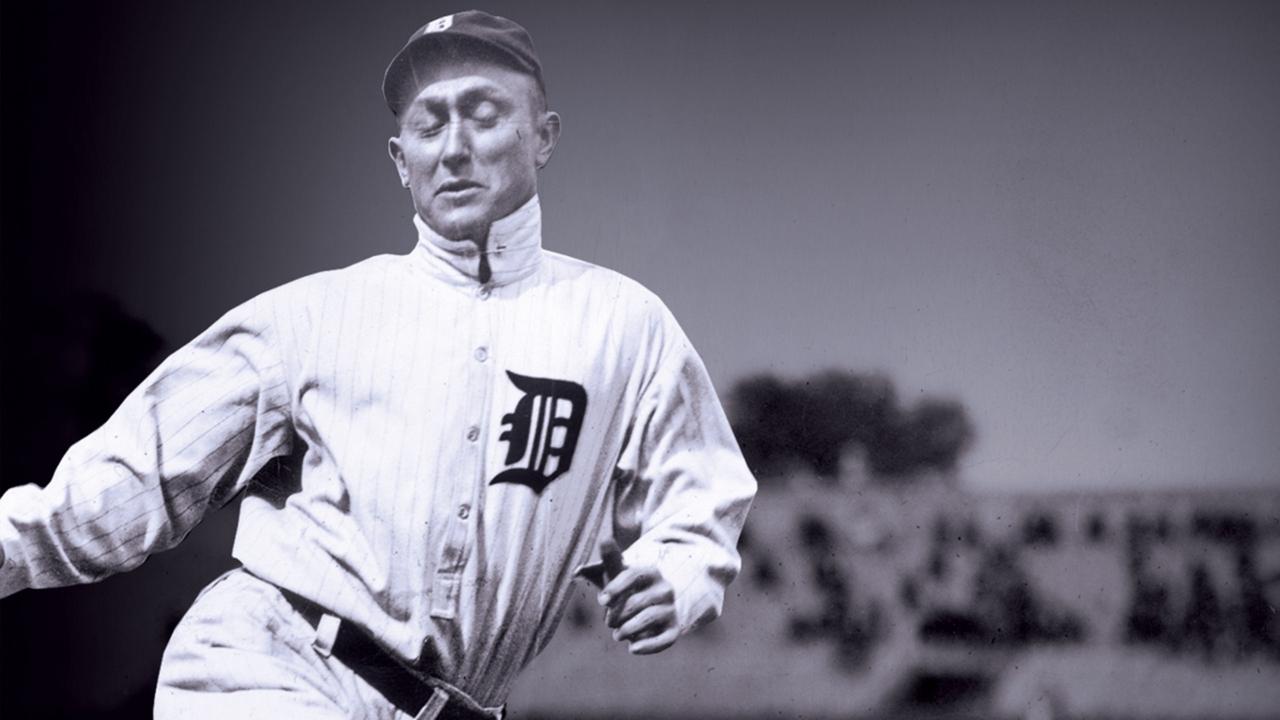
The greatest ballplayer of all time? ... I pick the Detroit man because he is, in my judgment, the most expert man in his profession and is able to respond better than any other ballplayer, to any demand made on him. ... He plays ball with his whole anatomy — his head, his arms, his hands, his legs, his feet. ...I have never seen a man who had his heart more centered in a sport than Cobb has when he’s playing. ... I believe Cobb would continue to play ball if he were charged something for the privilege, and if the only spectator were the groundskeeper.
Ty Cobb liked sentimentality in his opponents, because he had none himself. Baseball, he said, is something like a war.
Every rookie gets a little hazing, but most of them just take it and laugh. Cobb took it the wrong way. He came up with an antagonistic attitude, which in his mind turned any little razzing into a life-and-death struggle. He always figured everybody was ganging up on him. He came up from the South and he was still fighting the Civil War. As far as he was concerned, we were all damn Yankees before he even met us.
He never complained, never alibied. He was never known to criticize a teammate or call an opposing ballplayer 'lucky'. He accepted his great success modestly, and the many vicissitudes of his life in silence. He was easy to like, and hard to know.
Baseball suits the character of this democratic nation. Democracy is government by persuasion. That means it requires patience; that means it involves a lot of compromise. Democracy is the slow politics of the half-loaf. Baseball is the game of the long season where small incremental differences decide who wins and who loses particular games, series, seasons. In baseball, you know going to the ballpark that the chances are you may win, but you also may lose. There's no certainty, no given. You know when a season starts that the best team is going to get beaten a third of the time; the worst team is going to win a third of the time. The argument, over 162 games, is that middle third. So it's a game you can’t like if winning is everything. And democracy is that way, too.
Back in 1909, a rookie outfielder named Harry Hooper reported for spring training with the Boston Red Sox. He was a college man, and he began to keep a diary of the often-dreary life on the road:Thursday, March 25: Played the bench. Came near getting into game when [Tris] Speaker got hit sliding home, but stayed in the game. Harry Wolter and myself take in moving pictures in evening.Friday, April 16: Walk to top of Washington Monument with Nickerson.... Play left field in afternoon.... Get two hits in four, one single, 3 [putouts, and] one assist to plate.Monday, April 19: President Taft sees game.Monday, April 26: Doc Powers [catcher Mike Powers], who took sick at the finish of opening game, died today. We sent $25 for a wreathMonday, May 10: Rained all day. Sat around in hotel.Wednesday, May 12: We are invited to the Burlesque at the Empire. Good show—for its kind.Monday, June 28: Beat Washington. Got hit off [Walter] Johnson which scores winning run.–Harry Hooper
In 1919, no team played better than the Chicago White Sox, Pennant winners of the American League, and few teams were paid as poorly, or got along as badly. Players deliberately crossed each other on the field. During infield practice, no one threw the ball to second baseman Eddie Collins, Chicago’s highest-paid player, all season long. Teammate Chick Gandil had not spoken to Collins since 1915. “I thought you couldn’t win without teamwork,” Collins said later, “until I joined the White Sox, yet somehow we won 100 games and the Pennant that year.” The White Sox were heavy favorites to beat the better-paid but far weaker Cincinnati Reds in the World Series. The Chicago owner was the Old Roman, Charles A. Comiskey, himself a former player, but now among the game’s most parsimonious executives.
In two years, he [Shoeless Joe Jackson] had risen from a poor mill hand to the rank of a player in the major leagues. The ignorant mill boy had become the hero of millions. Out on the hot prairies, teams of "Joe Jacksons" battled desperately with the "Ty Cobbs." There came a day when a crook spread money before this ignorant idol and he fell. For a few dollars...he sold his honor...
Jackson could neither read nor write, but he could hit; .408 in his rookie year, .356 lifetime — the third highest average in history. His home runs were called Saturday Specials because most of the textile workers' games in which he got his start were played on Saturdays, and he hit them with a special 48-ounce bat, Black Betsy, made for him by a local lumberman from the north side of a hickory tree and darkened with coat after coat of Jackson's tobacco juice.
Only at bat did Jackson evidently forget the script—he would bat .375 in the Series.
Well I was at all the Chicago games, and Eddie Cicotte, one of our pitchers, who had won 29 games and lost 7 during the season, lost his two games, and Lefty Williams lost his two games. I’ve forgotten what his 1919 record was, but it was great, and it was just virtually impossible for those two men to lose two games each and be honest.
Who is this Baby Ruth? And what does she do?
Now, at any other time, something so disruptive of tradition would've been held in check. The moguls of the game would've changed the rules, they've done it twenty times before. But, in the wake of the Black Sox Scandal and the public fascination with Babe Ruth, they simply let it happen.
These quotes come from Wikiquote's Baseball pages and are available under the Creative Commons Attribution-ShareAlike License.