Brooklyn Eagle, 1846: In our sun-down perambulations, of late, through the outer parts of Brooklyn, we have observed several parties of youngsters playing "base", a certain game of ball...Let us go forth awhile, and get better air in our lungs. Let us leave our close rooms...the game of ball is glorious.

All S1
S1 E15Unfinished Business
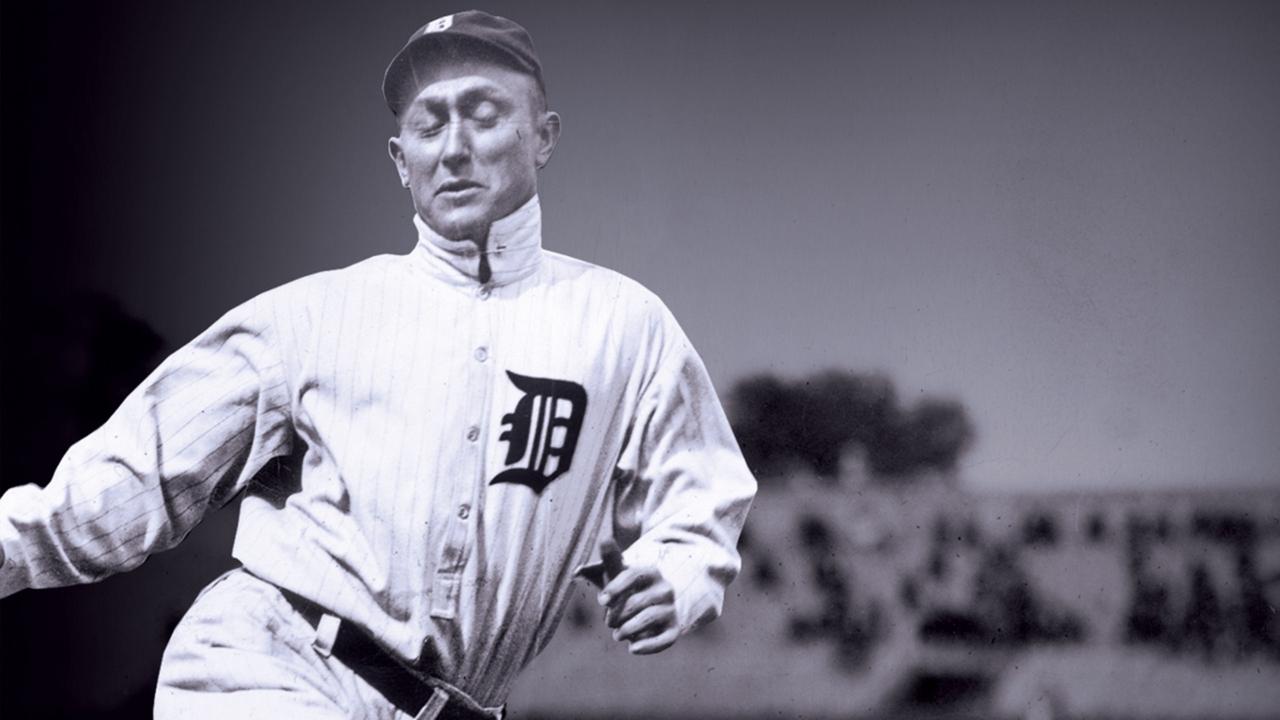
It is played everywhere: in parks and playgrounds, prison yards, in back alleys and farmers’ fields; by small boys and old men, raw amateurs and millionaire professionals. It is a leisurely game that demands blinding speed; the only game in which the defense has the ball. It follows the seasons, beginning each year with the fond expectancy of springtime and ending with the hard facts of autumn.Americans have played baseball for more than 200 years; while they conquered a continent, warred with each other and with enemies abroad, struggled over labor and civil rights, and with the meaning of freedom.At its heart lie mythic contradictions: a pastoral game born in crowded cities, an exhilarating democratic sport that tolerates cheating, and has excluded as many as it has included. A profoundly conservative game that often manages to be years ahead of its time. It is an American Odyssey that links sons and daughters to fathers and grandfathers, and it reflects a host of age-old American tensions; between workers and owners, scandal and reform, the individual and the collective.It is a haunted game in which every player is measured with the ghosts of those who have gone before. Most of all it is about time and timelessness, speed and grace, failure and loss, imperishable hope, and coming home.The game’s greatest figures have come from everywhere: coal mines and college campuses, city slums and country crossroads. A brawling Irish immigrant’s son [John McGraw] who for more than half a century preached a rough and scrambling brand of baseball in which anything went so as long victory was achieved; and his favorite player, a college-educated right-hander [Christy Mathewson] so uniformly virtuous that millions of schoolboys worshipped him as 'The Christian Gentleman'.A mill hand [Shoeless Joe Jackson] who could neither read nor write who might have been one of the game's greatest heroes if temptation had not proved too great. A flamboyant federal judge [Kenesaw Mountain Landis] who at first saved baseball from a scandal that threatened to destroy it, but later became an implacable enemy of reform.A miner’s son from Commerce, Oklahoma [Mickey Mantle], who made himself the game’s most powerful switch-hitter despite 17 seasons of ceaseless pain. A tight-fisted Methodist [Branch Rickey], "a cross", one sportswriter said, "between a statistician and an Evangelist", who profoundly changed the game twice. And there were those whose true greatness was never fully measured because of the stubborn prejudice that permeated the nation and its favorite game.Two of baseball's best began life in rural Georgia: A swift and savage competitor who may have been the greatest player of all time [Ty Cobb], but whose uncontrollable rage in the end made him more enemies than friends; and another no less fierce competitor [Jackie Robinson] who, because he managed to hold his temper, made professional baseball a truly national pastime more than a century after it was born.And then there was the Baltimore saloonkeeper’s turbulent son [Babe Ruth], who became the best-known and best-loved athlete in American history.
It's fun. That's what it is. It's fun. Baseball's more fun than anything else. You can watch it and just love it and enjoy it. I don't think there's anything tremendously philosophical about it. I don't think there's anything metaphysical. I just think it's so much fun to watch. You watch a player do something. You watch a second baseman go up in the air on a double play, and he throws the ball, and he's like a bird in flight. And he's watching to see what happens. You see a first baseman take a bad throw in the dirt and come up with stuff like that and sort of wander off the bag as if there's no problem at all. It's just delightful.
One summer day in 1839 in Cooperstown, New York, on the shores of Lake Otsego, the local academy was playing a game of town ball against Green's Select School. The rules of town ball were so loose that every hit was fair, and boys sometimes ran headlong into one another. That day, an academy player named Abner Doubleday sat down and, on the spot, drew up the rules for a brand new game and called it Baseball. Abner Doubleday would eventually become a hero at the Battle of Gettysburg, and his game would become the national pastime. Or so the legend has it. Abner Doubleday really was a distinguished soldier, but he was at West Point, not Cooperstown, that summer, never claimed to have had anything to do with baseball, may never have even seen a professional game. Baseball's real history is more complicated.
1786: a fine day. Play ball in the campus, but am beaten, for I miss catching and striking the ball.
Of all baseball’s ancestors, townball was by far the most popular. Under its rules, the infield was square. Eight to 15 men played on a side—sometimes, as many as 50. The pitcher, or feeder, was the least important player. It was his job to lob the ball to the striker, who could wait and wait for the pitch he wanted. The runner was out if the ball was caught on the fly, or if he was soaked: hit with the ball while running between bases. By 1800, townball and its many variations were played nearly everywhere. On their way back from the Pacific Ocean, Lewis and Clark played a game of base with the Nez Perce Indians as they prepared to cross the Bitterroot Mountains. In the 1830s, on the western frontier of Missouri, ball was the favorite sport of Joseph Smith, the founder of a new religious sect called the Mormons. But back east in Cooperstown, New York, city fathers passed an ordinance restricting play after merchants complained about too many broken windows. Meanwhile, in New York City, they were starting to play a brand-new version of the game.
By the spring of 1861, there were 62 member clubs in the National Association of Base Ball Players. Free Blacks in northern cities had established their own teams, and Henry Chadwick was trying to start a baseball club in Richmond, Virginia, when the new season was suddenly interrupted.
Virginia, April 3, 1862. It is astonishing how indifferent a person can become to danger. The report of musketry is heard but a very little distance from us,...yet over there on the other side of the road is most of our company, playing Bat Ball and perhaps in less than half an hour, they may be called to play a Ball game of a more serious nature.
In October 1867, as federal troops enforced civil rights laws in the South, the African-American Pythian Baseball Club of Philadelphia applied for membership in the Pennsylvania Association of Baseball Players. They were turned away. Two months later, the National Association took up the issue: "If colored clubs were admitted, there would in all probability be some division of feeling, whereas, by excluding them, no injury could result to anyone." Despite the ban, the Pythians became the first recorded all-black team to play a white team, the Philadelphia City Items: a group of newspapermen. The Pythians won: 27–17. Their captain, Octavius Catto, was later killed in a Philadelphia race riot that started when Blacks attempted to exercise their right to vote.
On many summer day, I played baseball starting at 8 in the morning, running home at noon for a quick meal, and again with fielding and batting until it was too dark to see the ball. There were times when my head seemed empty of everything but baseball names and figures. I could name the players who led in batting and fielding, and the pitchers who had won the most games. And I had my opinions — about who was better than anybody else in the national game.
Moses Fleetwood Walker, an Ohio clergyman's son who first played varsity ball for Oberlin College, was the first black to make it all the way to the majors. He joined Toledo of the American Association as a catcher in 1884 and immediately ran into a wall of bigotry. The Irish pitcher, Tony Mullane, ignored Walker's signals because, he said, he wouldn't take orders from a black man. Cap Anson himself tried to have Walker ejected from an exhibition game, threatening not to play if someone didn't "get that nigger off the field!" Anson backed down only when he realized he'd have to forfeit his pay if he really did walk out.
In 1884, when diphtheria swept through his village, he [John McGraw] was a slight, eager eleven-year-old whose proudest possession was the battered baseball he had been allowed to order from the Spalding catalogue. He watched helplessly as, one by one, his mother and four of his brothers and sisters died. His father took out his grief and anger on his son, beating him so often and so mercilessly that at 12 he feared for his life and ran away from home.
He [McGraw] supported himself at odd jobs until he won himself a place on the Olean [New York] professional team at sixteen and never again willingly took orders from any man. Although he was short and weighed barely 155 pounds, he held far bigger base runners back by the belt, blocked them, tripped them, spiked them—and rarely complained when they did the same to him.
Once, early in his career, a shy young outfielder dared compliment a New York Giant for hitting a home run. "Nice hit," he said. The veteran answered, "Go to hell." The young player was Johannes Peter Wagner, "Honus" Wagner, on his way to becoming the greatest player in the National League.
Now, Ban Johnson ordered his American League owners to have their stadiums patrolled to keep rowdiness down. Players and managers, as well as fans, were expected to behave. But there was one man who constantly challenged his authority. John Joseph McGraw, player-manager of the contentious Baltimore Orioles, had been one of the first National Leaguers to jump to the American League in 1901. But he had not liked it there. He could not bear to have anyone tell him how to play the game. When McGraw refused to stop the constant abuse of umpires—for which he was infamous—Johnson suspended him. McGraw never forgave Johnson. He returned to the National League as manager of the New York Giants, a job he would hold for 31 years, leading his team to 10 pennants and ending in the First Division 28 times.
These quotes come from Wikiquote's Baseball pages and are available under the Creative Commons Attribution-ShareAlike License.