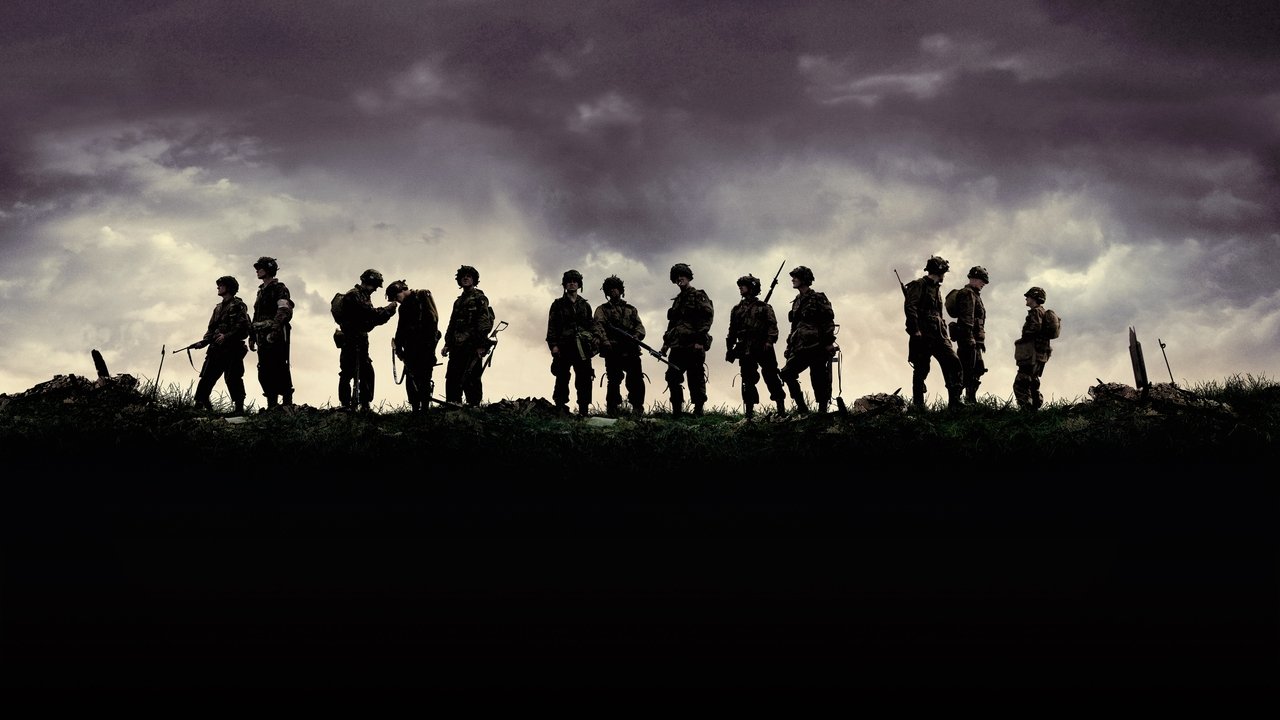

How we lived our lives after the war was as varied as each man.
“Points”
In this episode: Richard Winters (4), Carwood Lipton (1), Joseph Liebgott (1), Frank Perconte (1), Herbert Sobel (1)
Carwood Lipton became a glass-making executive in charge of factories all over the world. He has a nice life in North Carolina.
Harry Welsh, he married Kitty Grogan, and became an administrator for the Wilkes-Barre, Pennsylvania School System.
Ronald Spiers stayed in the Army. He served in Korea, and in 1958, returned to Germany as governor of Spandau Prison. He retired a Lieutenant Colonel.
Lewis Nixon had some tough times after the war. He was divorced a couple of times, then, in 1956, he married a woman named Grace and everything came together for him. He spent the rest of his life with her, traveling the world. My friend Lew died in 1995.
I took up his job offer, and was a personnel manager at the Nixon Nitration Works, until I was called back into service in 1950 to train officers and Rangers. I chose not to go to Korea; I'd had enough of war. I stayed around Hershey, Pennsylvania, finally finding a little farm, a little peaceful corner of the world, where I still live today. And there is not a day that goes by that I do not think of the men I served with who never got to enjoy the world without war.

Henry V was talking to his men. He said, "from this day to the ending of the world... we in it shall be remembered. We lucky few, we band of brothers. For he who today shed his blood with me shall be my brother."

[quoting from a letter Mike Ranney wrote to him]: "I cherish the memories of a question my grandson asked me the other day, when he said: 'Grandpa, were you a hero in the war?' Grandpa said, 'No. But I served in the company of heroes.'"
These quotes come from Wikiquote's Band of Brothers pages and are available under the Creative Commons Attribution-ShareAlike License.