This is the Jurassic period, and the giant continent of Pangea that use to stretch from pole to pole is now breaking up. It is much wetter than the earlier Triassic period, and where there were once deserts, there are now vast forests of conifer trees.
“Time of the Titans” · Season 1, Episode 2
In this episode: Narrator (6)
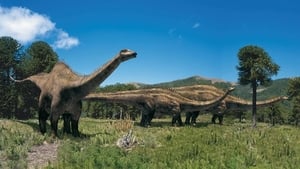
There are vast open fern prairies, and this is were the titans of the Jurassic roam. Dinosaurs like Stegosaurus, with its distinctive row of spinal plates. These prairies are kept clear of trees by the constant grazing of such giant herbivorous. And none have a larger impact on this environment than the biggest dinosaurs of them all, the sauropods. There are many different types of these gigantic, long-necked creatures. These are Diplodocus, the longest of them all.
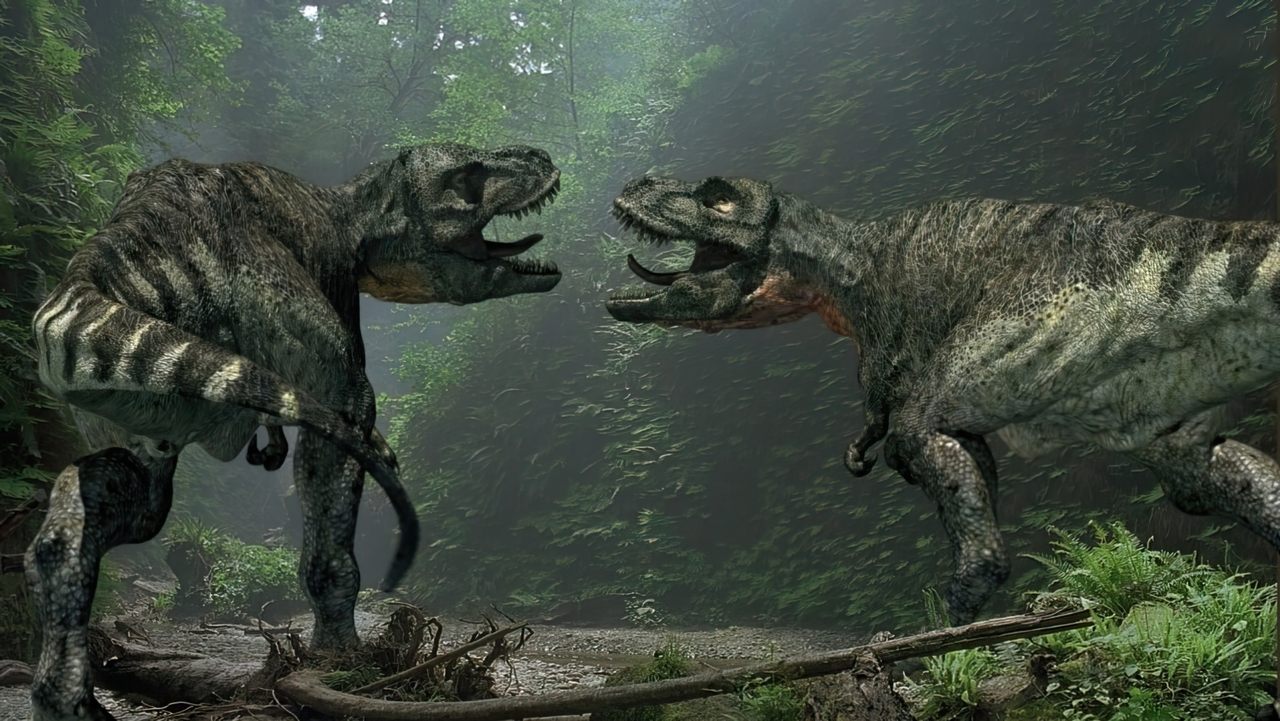
[about the Allosaurus] These are the lions of the Jurassic. The top predators of their age.
This is Brachiosaurus, a 13 meter high sauropod that specialises in grazing on the tree tops. His kind can effortlessly harvest cones and fresh leaves no other dinosaur can reach, and they have grown enormous on it. These adults weigh 70 tons, making them the largest animals that have ever existed.
Sauropods dominate the late Jurassic, and it will be millions of years before new dinosaur herbivores evolve to replace them. With their passing, life will never again be this large.
Eventually the mighty sauropods went into decline, and their lowland prairies became flooded, because the sea levels began to rise. This created vast inland seas, and in the next program, we will meet the giant carnivorous reptiles that patrolled them.
These quotes come from Wikiquote's Walking with Dinosaurs pages and are available under the Creative Commons Attribution-ShareAlike License.