


There's not much you can't accomplish in this town with a case of beer and a wheel of cheese.
“Unfinished Business” · Season 1, Episode 15
In this episode: Dean Winchester (940), Damon Salvatore (715), Sam Winchester (665), Olivia Benson (637), Stephen Fry (608), Narrator (554), Clark Kent (523), Nate (486)
RHRusty Heck
[after describing how his house burnt down due to his falling asleep with a cigarette in his mouth] I blame myself, partially.

I want family in this house, Mike. Otherwise it's not Thanksgiving. It's just overeating!
Hey, Brick, you're slowing down. Come on, you've got 30 kids in the class. You've got to keep moving.

Have you guys seen these things? It's candy with words on it. Candy and words, who thought of this?
Brick, you've gotta sign your name to the card, stick it in the envelope with a couple of hearts, lick it. C'mon, Brick, lick, stick, done.
When did they invent these? 'Be mine.' So simple, yet so profound. 'Luv ya.' Genius!
[helping Brick with his Valentine's cards]
Not the one with the lion on it.
Whoa. What's the big deal about this one? 'I like you and I'm not lion!' Someone spent four years in college to come up with that.
That one's for Autumn Wagner.
Oooh, so who's Autumn Wagner?
She has pink lips and can do three cartwheels … in a row!
Wow, no wonder she gets the lion Valentine.

Hi, Mrs. Jacobs. I'm here to talk to you about...
JMrs. Jacobs
Are you a new student?
No. I'm Sue. Sue Heck.
In some cities, cars are status symbols, but out here in the middle, it's sensible people with sensible cars.
Ta-da!
What is this? Your tired of getting eight miles a gallon, you wanted four?
I'm a bus driver!
Wow. So, when did this happen?
Well, you guys have been pressuring me to get a job, so I got a job
What do you mean? We didn't pressure you. We haven't said a word since you've been home from Europe
AAxel
I know, which is actually more annoying than when you say something. You guys are always sharing looks
We don't share looks [scoffs]
Ok. I get it. I'm not an irresponsible college kid anymore, so now, I am a contributing member of society with a job and a salary, but I don't get paid for two more weeks, so I need you to spot me a $20. Oh, my god! You're doing it again!
Look, Axl, we're very proud that you got a job and, frankly, more than a little relieved, but you worked hard to get yourself a business degree
I know! That's the whole point of this sweet gig. I am free to go on interviews in the business world
You're going on interviews with your little hairdo there?
Oh, my god. Step into the twenty-teens, grandpa. They're not gonna judge me on my hair, but I wish they would. You know how much disciple it took... to grow this thing out
[April 26, 1988: Alone in his apartment in Moscow, Professor Valery Legasov replays his voice on a tape recorder]
What is the cost of lies? It's not that we'll mistake them for the truth. The real danger is that if we hear enough lies, then we no longer recognize the truth at all. What can we do then? What else is left to abandon even the hope of truth and content ourselves instead with stories? In these stories, it doesn't matter who the heroes are. All we want to know is: "Who is to blame?" In this story, it was Anatoly Dyatlov. He was the best choice. An arrogant, unpleasant man, he ran the room that night, he gave the orders... and no friends. Or at least, not important ones. And now Dyatlov will spend the next ten years in a prison labor camp. Of course, that sentence is doubly unfair. There were far greater criminals than him at work. And as for what Dyatlov did do, the man doesn't deserve prison. He deserves death.
[Legasov stops the tape, sips a glass of water, and then restarts the tape from where he left off.]
But instead, ten years for "criminal mismanagement". What does that mean? No one knows. It doesn't matter. What does matter is that, to them, justice was done. Because, you see, to them, a just world is a sane world. There was nothing sane about Chernobyl. What happened there, what happened after, even the good we did, all of it... all of it, madness. Well, I've given you everything I know. They'll deny it, of course. They always do. I know you'll try your best.
[April 26, 1986: Immediately after the explosion, deputy chief engineer Anatoly Dyatlov stands shocked as shift supervisor Aleksandr Akimov calls his name repeatedly and alarms blare]
AAAleksandr Akimov
Comrade Dyatlov? Comrade Dyatlov?!
What just happened?
LTLeonid Toptunov
I don't know.
[Turbine engineer Vyacheslav Brazhnik rushes into the room]
VBVyacheslav Brazhnik
There's a fire in the turbine hall.
The turbine hall... The control system tank. Hydrogen. [addressing Akimov] You and Toptunov, you morons blew the tank.
TToptunov
No, that's not--
This is an emergency, everyone stay calm. Our first priority is to--
[As Dyatlov speaks, foreman Valeriy Perevozchenko runs through the open door in a panic]
VPValeriy Perevozchenko
It exploded!
We know. Akimov, are we cooling the reactor core?
We shut it down, but the control rods are still... They're not all the way in, I disengaged the clutch --
Alright, I'll disconnect the servos from the standby console. [to two other engineers] You two, get the backup pumps running, we need water moving through the core, that is all that matters!
PPerevozchenko
There is no core! It exploded, the core exploded!
[Beat as all the engineers stare at Perevozchenko in disbelief and fear]
He's in shock, get him out of here.
PPerevozchenko
The lid is off. The stack is burning, I saw it.
You're confused, RBMK reactor cores don't explode. Akimov! [picks up the phone to call out]
TToptunov
[whispering, to Akimov] Sasha...
Don't worry, we did everything right. Something... something strange has happened.
TToptunov
Do you taste metal?
Akimov!
[glances at Perevozchenko] Comrade Perevozchenko, what you're saying is physically impossible. The core can't explode. It has to be the tank.
[Perevozchenko wordlessly shakes his head]
[hangs up the phone] We're wasting time. Let's go. Get the hydrogen out of the generators and pump water into the core.
BBrazhnik
What about the fire?
[annoyed; as if it were obvious] Call the fire brigade. [storms out]
[April 26, 1986: Dyatlov meets with plant director Viktor Bryukhanov and chief engineer Nikolai Fomin in a bunker underneath the plant]
[dryly] I take it the safety test was a failure.
We have the situation under control.
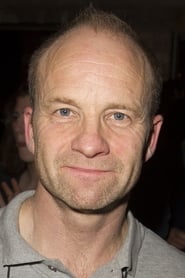
Under control? It doesn't look like it's under control.
Shut up, Fomin. [to Dyatlov] I have to tell the Central Committee about this. Do you realize that? I have to get on the phone and tell Maryin, or God forbid Frolyshev, that my power plant is on fire.
No one can blame you for this, Director Bryukhanov
Of course no one can blame me for this. How can I be responsible? I was sleeping. Tell me what happened. Quickly.
We ran the test exactly as Chief Engineer Fomin approved. Unit Shift Chief Akimov and Engineer Toptunov encountered technical difficulties, leading to an accumulation of hydrogen in the control system tank. It, regrettably, ignited, damaging the plant and setting the roof on fire.
[Bryukhanov looks to Fomin]
The tank is quite large, yes. It's the only logical explanation. Of course, Deputy Chief Engineer Dyatlov was directly supervising the test, so he would know best.
A hydrogen tank, fire...Reactor?
We're taking measures to ensure a steady flow of water through the core.
What about radiation?
Obviously, down here it's nothing, but in the reactor building, I'm being told 3.6 roentgen per hour
Well, that's not great, but it's not horrifying.
Not at all. From the feedwater, I assume?
[Dyatlov nods]
We'll have to limit shifts to six hours at a time, but otherwise...
The dosimetrists should be checking regularly. Have them use the good meter, from the safe. Right, I'll call Maryin. Have them wake up the local committee, there'll be orders coming down.
I dropped the rods from the other panel.
AAAleksandr Akimov
They're still up.
What?
They're still only a third of the way in, I don't know why. I already sent the trainees down to the reactor hall to lower them by hand.
What about the pumps?
LTLeonid Toptunov
I can't get through to Khodemchuk, the lines are down.
Fuck the phones and fuck Khodemchuk. Are the pumps on or not?
Stolyarchuk?
BSBoris Stolyarchuk
My control panel's not working. I tried calling for the electricians--
I don't give a shit about the panel! I need water in my reactor core! Get down there and make sure those pumps are on. Now!
[several engineers leave the control room as Dyatlov sits down at a desk]
What does the dosimeter say?
Ah, 3.6 roentgen, but that's as high as the meter--
3.6. Not great, not terrible.
[quietly, to Toptunov] We did everything right.
[April 26, 1986: Meeting in the power plant office, engineer Anatoly Sitnikov reports high radiation in reactor 4]
What's wrong with you? How'd you get that number from feedwater leaking from a blown tank?
ASAnatoly Sitnikov
You don't.
Then what the fuck are you talking about?
SSitnikov
I... [clears throat] I walked around the exterior of building 4. I think there's graphite on the ground in the rubble.
You didn't see graphite.
SSitnikov
I did.
You didn't. YOU DIDN'T! Because it's NOT THERE!
What, are you suggesting the core... what? Exploded?
SSitnikov
[almost a whisper] Yes.
Sitnikov, you're a nuclear engineer. So am I. So please tell me how an RBMK reactor core explodes. Not a meltdown, an explosion. I'd love to know.
SSitnikov
I can't.
Are you stupid?
SSitnikov
No.
Then why can't you?
SSitnikov
I... [stammers] I don't see how it could explode. [Fomin looks satisfied] But it did.
[pounds the table, swaying on his feet] Enough! I'll go up to the vent block roof. From there, you can look right down into reactor building 4. I'll see it with my own... with my own eyes. [vomits on the table] I apologize. [collapses]
[Meeting of the plant's executive committee]
ZZharkov
I wonder how many of you know the name of this place. We all call it "Chernobyl", of course. What is its real name?
The Vladimir I. Lenin Nuclear Power Station.
ZZharkov
Exactly. Vladimir I. Lenin. [points to the image of Lenin on the nearby wall] And how proud he would be of you all tonight. Especially you, young man, the passion you have for the people. For is that not the sole purpose of the apparatus of the State? Sometimes we forget. Sometimes we fall prey to fear. But our faith in Soviet socialism will always be rewarded. Now the State tells us the situation here is not dangerous. Have faith, comrades. The State tells us it wants to prevent a panic. Listen well! It's true, when the people see the police, they will be afraid. But it is my experience that when the people ask questions that are not in their own best interest, they should simply be told to keep their minds on their labor and leave matters of the State to the State. We seal off the city. No one leaves. And cut the phone lines. Contain the spread of misinformation. That is how we keep the people from undermining the fruits of their own labor. Yes, comrades... we will all be rewarded for what we do here tonight. This is our moment to shine.
[Dmitri wakes Ulana up at her lab, 7 hours after the explosion]
DDmitri
You work too hard.

Where is everyone?
DDmitri
Oh, they refused to come in.
Why?
DDmitri
It's Saturday.
Why did you come in?
DDmitri
I work too hard. It's boiling in here. [opens a window. A radiation alarm goes off. Dmitri immediately closes the window and then checks the alarm's reading.] Eight millirontgen. Leak?
No, it would've gone off before. It's coming from outside.
DDmitri
The Americans?
[Ulana grabs a swab, opens a window, gathers a sample of dust from the window's outside, then closes the window and takes the swab sample to a machine to get a reading. Returns with the reading]
Iodine-131. It's not military, it's uranium decay: U-235.
DDmitri
Reactor fuel? [Ulana goes to a phone] Ignalina, maybe? 240 km away?
[calls the Ignalina power station] Yes, this is Ulana Khomyuk, with the Institute of Nuclear En...looking for...[listens to the person on the phone] Alright, stay calm- [gets interrupted by the other person on the line before getting hung up on] They're at 4. It's not them. Who's the next closest?
DDmitri
Chernobyl, but that's not possible. They're 400 km away.
Well, then that's too far for 8 millirontgen. They'd have to be split open. Maybe they know something. [Calls Chernobyl, and takes a pill, passing the bottle to Dmitri] Iodine.
DDmitri
Could it be a waste dump?
We'd be seeing other isotopes.
DDmitri
Nuclear test? Uh, a new kind of bomb?
We'd have heard. That's what half of our people work on here.
DDmitri
Something with the space program, like a satellite, or...
[looks up] No one's answering the phone.
[As Valery Legasov and Boris Shcherbina make their way to Chernobyl in a helicopter...]
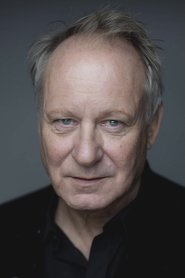
How does a nuclear reactor work?
What?
It's a simple question.
It's hardly a simple answer.
Of course, you presume I'm too stupid to understand. So I'll restate: Tell me how a nuclear reactor works, or I'll have one of these soldiers throw you out of the helicopter.
A nuclear reactor makes electricity with steam. The steam turns a turbine which generates electricity. Where a typical power plant makes steam by burning coal, a nuclear plant...
[Legasov tries to find a pen in his pocket to draw a diagram. Scherbina hands his pen and a scratch paper to Legasov]
[Draws diagram] In a nuclear plant, we use something called fission. We take an unstable element like Uranium-235, which has too many neutrons. A neutron is, uh—
The bullet.
[Impressed] Yes, the bullet. So, bullets are flying off of the uranium. Now...if we put enough uranium atoms close together, the bullets from one atom will eventually strike another atom. The force of this impact splits that atom apart, releasing a tremendous amount of energy, fission.
And the graphite?
[Exhales] Ah, yes. The neutrons are actually traveling so fast we call this "flux"—it's relatively unlikely that the uranium atoms will ever hit one another. In RBMK reactors, we surround the fuel rods with graphite to moderate—slow down—the neutron flux.
Good. [Takes his pen back] I know how a nuclear reactor works. Now I don't need you.
These quotes come from Wikiquote's Criminal Minds pages and are available under the Creative Commons Attribution-ShareAlike License.