Most-quoted character in Touch: in 30 of its 40 quotes
Lines by Jake Bohm 30
Jake
[voiceover] The earth, as it rotates, emits a frequency - a musical note at 7.83 Hz, but this frequency alters slightly from reasons as yet uncertain. Some postulates solar flares as its cause or electrical disturbance in the atmosphere. But maybe there's a simpler explanation. Maybe the sound of the planet is influenced by the 7B souls whirring around it. Each producing their own music, adding their own harmony.
[voiceover] The chromatic scale consists of 12 tones arranged in time and sequence. These 12 simple tones create an infinite variety of music. Harmony and dissonance. Tension and resolution. All can be described by the mathematical ratios between tones. If we could translate all ratios into sound, we can hear the Music of the Spheres. A sound as immense, as powerful as the universe itself. As quiet as a single stone. As beguiling as the human heart. For some, music elevates the spirit to a place of transcendent beauty. Others simply hear the beauty in the numbers themselves.
[voiceover] Symmetry is the language of the universe. It is written in mathematical language and the letters are triangles, circles and other geometrical figures. Without which it is humanly impossible to comprehend a single word. But some of us can speak it; we see the precise patterns – the tessellations. Those geometric shapes rotated and reflected, infinitely repeated. And when you speak the language, follow the logic you can predict the next step. You just have to trust in where the paths meet.
[voiceover] We are all a part of this infinite tessellation; each a single cell in a honeycomb. And though individual pieces of this puzzle may never physically touch, they all form part of that same grand mosaic. Like bricks in a wall, the whole is made stronger by each brick. Remove one and it all comes crumbling down. Though we may not realize it, the integrity of this wall is tested daily. But the wall holds. Because of everyone's collective support.
[voiceover] In 1992, a shipping container fell overboard on its way from China to the United States, losing 29,000 rubber ducks in the Pacific Ocean. Ten months later, the first of these rubber ducks was washed ashore on the Alaskan Coast. Since then, these ducks have been found in Hawaii, South America, Australia, and travelling slowly inside the Arctic Ice. But 2,000 of the ducks were caught up in the North Pacific Gyre. A vortex of currents moving between Japan, Alaska, the Pacific Northwest and the Aleutian Islands. Items that get caught in the gyre usually stay in the gyre. Doomed to travel the same path, forever circling in the same waters, but not always. Their paths can be altered by a change in the weather, a storm at sea, a chance encounter with a pod of whales, Twenty years after the rubber ducks were lost at sea, they are still arriving on beaches around the world. And the number of ducks in the gyre has decreased, which means it's possible to break free, even after years of circling the same waters. It's possible to find a way to shore.
[voiceover] There are 31,530,000 seconds in a year, a thousand milliseconds in a second, a million microseconds, a billion nanoseconds. And the one constant connecting nanoseconds to years is change. The universe, from atom to galaxy, is in a perpetual state of flux. But we humans don't like change; we fight it, it scares us. So we create the illusion of stasis. We want to believe in a world at rest, the world of right now yet our great paradox remains the same. The moment we grasp the now that now is gone. We cling to snapshots, but life is moving pictures, each nanosecond different from the last. Time forces us to grow, to adapt because every time we blink our eyes the world shifts beneath our feet. Every day, every moment, every nanosecond the world changes. Electrons bump into each other and react; people collide and alter each other's paths. Change isn't easy, more often it's wrenching and difficult, but maybe that's a good thing, because it's change that makes us strong, keeps us resilient, and teaches us to evolve.
[voiceover] We can't help but wonder how much difference one person makes in the world. We look inside ourselves, questioning if we have the capacity for heroism and greatness. But the truth is every time we take an action, we make an impact. Every single thing we do has an effect on the people around us. Every choice we make sends ripples out into the world. Our smallest acts of kindness can cause a chain reaction of unforeseen benefits for people we've never met. We might not witness those results, but they happen all the same.
[voiceover] The point when all things are possible; the moment when a choice was made or an action taken; the breath inhaled before a first step forward. And the most lasting chain reactions that are started by those moments. And actions and choices are always the ones that are started by love.
[voiceover] There are infinite ways to communicate; some better than others. Today, the average person will say 17,520 words to 7.4 other individuals. Yet change the language, one border to the next, and we are helpless. Stumbling to explain the simplest of concepts: I want, I am, I love. My name is Jake. I was born on October 26, 2000. I've been alive for 11 years, 8 months and 16 days. And in all that time, I've never said a single word. But that's about to change.
[voiceover] Sometimes storms do not arrive full blown. Sometimes they build over days, or even weeks. An arctic storm moving southward can suddenly crash into a tropical hurricane that's traveling north. And when these collisions of weather systems occur, it causes the storm to explode. The sum total of their destructive energy is far greater than what any of them would have been had they remained on their own, creating what meteorologists sometimes call perfect conditions for a deadly storm. A perfect storm.
[voiceover] In a vacuum, radio waves travel at the same speed as all forms of electromagnetic radiation. That is, 299,792,458 m/s. But human beings do not live in a vacuum. Wherever we are, we're surrounded by stimuli, both positive and negative. When negative stimuli is perceived, it travels from its source to its destination, the sensory cortex, at a mere 100 m/s. But regardless of its relatively slow speed, this unpleasant sensation registers as something we call pain, and as humans, we are conditioned to do anything and everything to avoid it.
[voiceover] There are infinite ways to communicate. Some better than others. Signals, signs, patterns, mathematical in design, all around us. You just have to know how to see them. How we read this subtle cues determines the course of our lives. Language is considered the ultimate form of connection designed to optimize our connection to each other. Today, the average person would say 2,520 words to 7.4 other individuals. Yet change the language one border to the next and we are hopeless, stumbling to explain the simplest concepts: "I want.", "I am.", "I love."
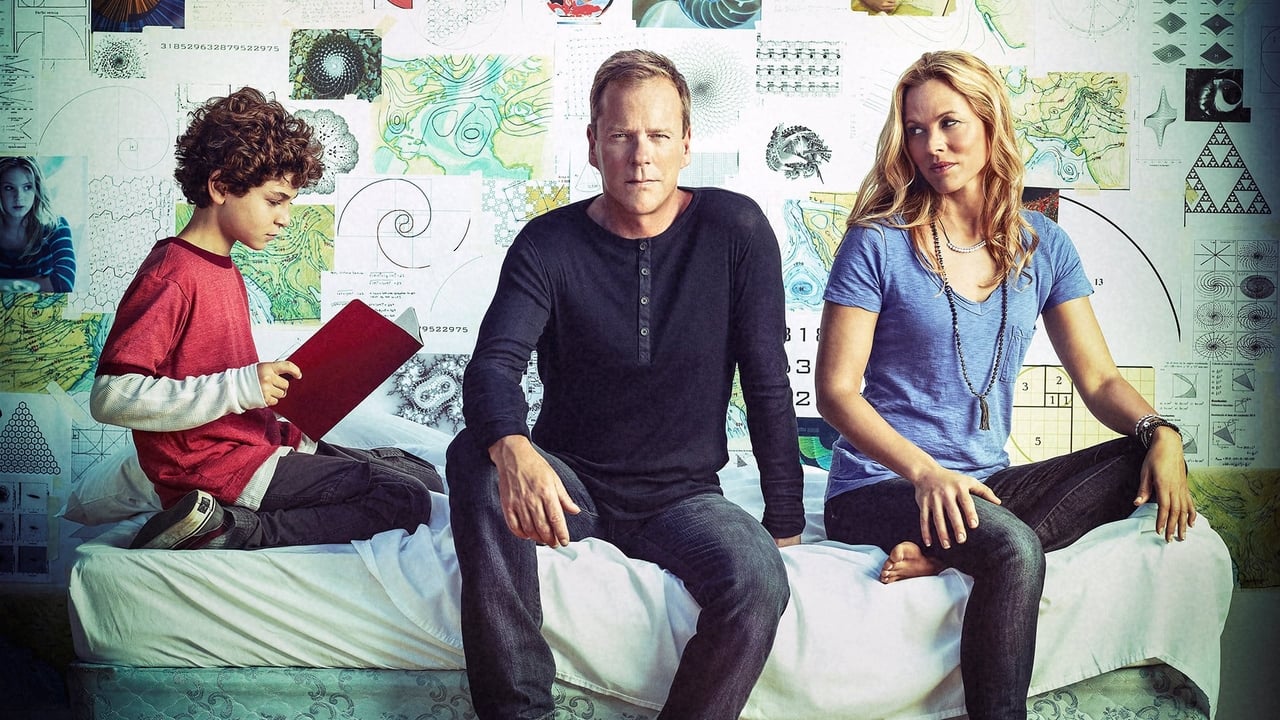
 Touch · 40 quotes
 Jake
