
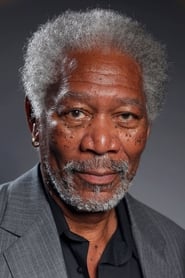
Space, time, life itself—the secrets of the cosmos lie through the wormhole.
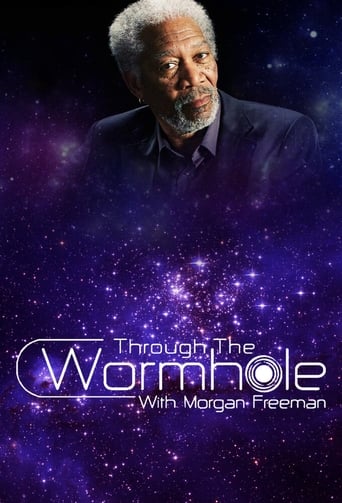
S1 E15Unfinished Business
If you think you see everyone as equal, you're kidding yourself. We all have biases, and no matter how open-minded we think we are, stereotypes colour our judgements of others and can lead us badly astray. We live in a society fractured by race, religion, even our favourite sports teams. We divide ourselves into rival tribes.
MFMorgan Freeman as the caricature of a politician on a television screen
"The political divide between us grows deeper with every passing year."
When did hate become hard-wired into our brains?
MFMorgan Freeman as the caricature of a politician on a television screen
"We live in two different Americas, one for the rich…"
Are we all born to discriminate against our fellow humans? All we all bigots?
Now, I think of myself as an open-minded person, but scientists tell me I'm kidding myself, and so are you. We all look at the world with prejudice, and when you only have a split second to decide, your own snap judgements may shock you.
So, what we want to look at is, in that situation, where there's not good, clear information, where people have to respond quickly, do they use race to inform their decisions?
It's worth noting that, in this game, people are pretty good. They don't make a ton of mistakes—ten, fifteen percent of the time they make a mistake. But when we look at those mistakes, we see racial bias in the errors. So they're faster to shoot the armed target if he's black rather than than white. When the target's got a cell phone, they're much more likely to make that decision, to shoot an innocent target, when he's black rather than white.
Does this mean that white Americans are inherently bigoted? An utterly shocking trend with Josh's black participants suggests that it's much more complicated than that.
We see that black participants show the same anti-black bias that white participants do. Actually, when we test to see if there's a difference in the two groups, white participants versus black participants, they're not statistically different from each other. So, we think this represents an awareness of a cultural stereotype, not that our participants believe, necessarily, that black men are more dangerous than white men.
Morgan Freeman: Why would we make life-and-death decisions based on stereotypes we don't even believe? I always thought we could overcome these bigoted ideas, but one neuroscientist says it's not that simple; racist stereotypes hijack our subconscious minds.Neuroscientist Jon Freeman believes we all carry around stereotypes in our subconscious. … These prejudiced thoughts are quickly snuffed out by the conscious mind, but that doesn't mean that they're harmless.
JFJon Freeman
Those stereotypes can actually wind up impacting behaviour. So, for example, if individuals unconsciously see African-American faces as being slightly more angry than they are, that's probably going to impact how much they approach or avoid that individual at a spontaneous level.
It may not be as hard as you think for a bigot to have a change of heart. If any of us has a positive experience with someone from a different racial group, biology has the power to make us feel empathy for a stranger from that group. In facts, Peggy believes that empathy is a primal instinct for all mammals.
PMPeggy Mason
What rats tell us is that we have a mammalian inheritance which makes us want to help another in distress. But the amazing thing we learn from the rats is that what the rats need to do is to have an experience with a different type of rat, and then that rat can be part of their in-group, too. And that's really—that's really an amazing and hopeful message, I think.
But bigotry isn't just about the circumstances of your birth. Even fans of rival sports teams can learn to hate one another with all the venom of a bigot.
Do you see the world as it really is, or how your political party wants you to see it.
Media pundits often accuse violent video games of destroying the morality of our youth. Is that really true? Matthew has a series of test subjects play a game where they can hurt simulated human beings. So, Matthew gives the order to commit blatant crimes against humanity. … It is guilt-inducing, to say the least.
MGMatthew Grizzard
So, our findings showed that individuals recalling a real-world guilty experience actually felt more guilt, but that guilt solicited by video game was positively associated with increased moral sensitivity.
For now, our best tool to fight bigotry lies within ourselves: the courage to walk away. We all have bigotry inside us. Most of us work hard to suppress our innate prejudices, but some don't, and their bigotry is infectious. The solution to bigotry does not start with government and laws; it starts with understanding and neutralising its source, and with you and me doing our best to change.
We're all marching relentlessly forward through time. We accept that there's no way to get off this ride, or to change our destiny. But what if that's not really true? What if we can send messages back in time and change events that already happened? Can the future reach back and re-write the present? Can time go backwards?
TBTodd Brun
The direction of time itself is something of a mystery. In the equations of physics, it seems like you could run them either forwards or backwards.
These quotes come from Wikiquote's Through the Wormhole pages and are available under the Creative Commons Attribution-ShareAlike License.