2nd most-quoted character in The Twilight Zone (1959): in 144 of its 373 quotes
Lines by Rod Serling 135
Rod Serling
Exit the infernal machine, and with it his satanic majesty, Lucifer, Prince of Darkness, otherwise known as Mr. Smith. He's gone, but not for good. That wouldn't be like him. He's gone for bad. And he might be back, with another ticket to the Twilight Zone.
Exit one Paul Driscoll, a creature of the twentieth century. He puts to a test a complicated theorum of space-time continuum, but he goes a step further--or tries to. Shortly, he will seek out three moments of the past in a desperate attempt to alter the present--one of the odd and fanciful functions in a shadowland known as the Twilight Zone.
Incident on a July afternoon, 1881. A man named Driscoll who came and went and, in the process, learned a simple lesson, perhaps best said by a poet named Lathbury, who wrote, 'Children of yesterday, heirs of tomorrow, what are you wearing? Labor and sorrow? Look to your looms again, faster and faster fly the great shuttles prepared by the master. Life's in the loom, room for it--room!' Tonight's tale of clocks and calendars--in the Twilight Zone.
In the vernacular of space, this is T minus one hour, sixty minutes before a human being named Major Robert Gaines is lifted off from the Mother Earth and rocketed into the sky, farther and longer than any man ahead of him. Call this one of the first faltering steps of man to sever the umbilical cord of gravity and stretch out a fingertip toward an unknown. Shortly, we'll join this astronaut named Gaines and embark on an adventure, because the environs overhead - the stars, the sky, the infinite space - are all part of a vast question mark known as the Twilight Zone.
Major Robert Gaines, a latter-day voyager just returned from an adventure. Submitted to you without any recommendation as to belief or disbelief. You can accept or reject; you pays your money and you takes your choice. But credulous or incredulous, don't bother to ask anyone for proof that it could happen. The obligation is a reverse challenge: prove that it couldn't. This happens to be... the Twilight Zone.
Meet Mr. George P. Hanley, a man life treats without deference, honor or success. Waiters serve his soup cold. Elevator operators close doors in his face. Mothers never bother to wait up for the daughters he dates. George is a creature of humble habits and tame dreams. He's an ordinary man, Mr. Hanley, but at this moment the accidental possessor of a very special gift, the kind of gift that measures men against their dreams, the kind of gift most of us might ask for first and possibly regret to the last, if we, like Mr. George P. Hanley, were about to plunge head-first and unaware into our own personal Twilight Zone.
Mr. George P. Hanley. Former vocation: jerk. Present vocation: genie. George P. Hanley, a most ordinary man whom life treated without deference, honor or success, but a man wise enough to decide on a most extraordinary wish that makes him the contented, permanent master of his own altruistic Twilight Zone.
Martin Lombard Senescu, a gentle man, the dedicated curator of murderers' row in Ferguson's Wax Museum. He ponders the reasons why ordinary men are driven to commit mass murder. What Mr. Senescu does not know is that the groundwork has already been laid for his own special kind of madness and torment found only in the Twilight Zone.
The new exhibit became very popular at Marchand's, but of all the figures none was ever regarded with more dread than that of Martin Lombard Senescu. It was something about the eyes, people said. It's the look that one often gets after taking a quick walk through the Twilight Zone.
Witness a murder. The killer is Mr. William Feathersmith, a robber baron whose body composition is made up of a refrigeration plant covered by thick skin. In a moment Mr. Feathersmith will proceed on his daily course of conquest and calumny with yet another business dealing. But this one will be one of those bizarre transactions that take place in an odd marketplace known as the Twilight Zone.
Mr. William J. Feathersmith, tycoon, who tried the track one more time and found it muddier than he remembered, proving with at least a degree of conclusiveness that nice guys don't always finish last, and some people should quit when they're ahead. Tonight's tale of iron men and irony, delivered F.O.B. from the Twilight Zone.
Mr. Horace Ford, who has a preoccupation with another time, a time of childhood, a time of growing up, a time of street games, stickball and hide-'n-go-seek. He has a reluctance to check out a mirror and see the nature of his image: proof positive that the time he dwells in has already passed him by. But in a moment or two he'll discover that mechanical toys and memories and daydreaming and wishful thinking and all manner of odd and special events can lead one into a special province, uncharted and unmapped, a country of both shadow and substance known as the Twilight Zone.
Exit Mr. and Mrs. Horace Ford, who have lived through a bizarre moment not to be calibrated on normal clocks or watches. Time has passed, to be sure, but it's the special time in the special place known as the Twilight Zone.
This is William Benteen, who officiates on a disintegrating outpost in space. The people are a remnant society who left the Earth looking for a Millennium, a place without war, without jeopardy, without fear--and what they found was a lonely, barren place whose only industry was survival. And this is what they've done for three decades: survive; until the memory of the Earth they came from has become an indistinct and shadowed recollection of another time and another place. One month ago a signal from Earth announced that a ship would be coming to pick them up and take them home. In just a moment we'll hear more of that ship, more of that home, and what it takes out of mind and body to reach it. This is the Twilight Zone.
William Benteen, who had prerogatives: he could lead, he could direct, dictate, judge, legislate. It became a habit, then a pattern and finally a necessity. William Benteen, once a god, now a population of one.

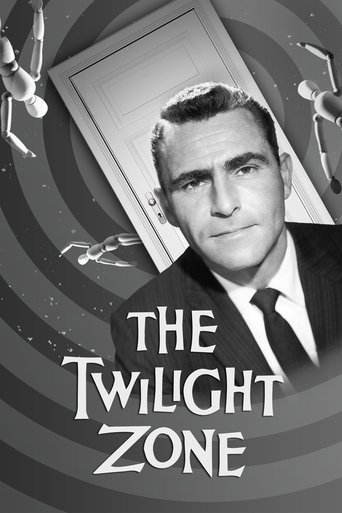 The Twilight Zone (1959) · 373 quotes
 Rod Serling