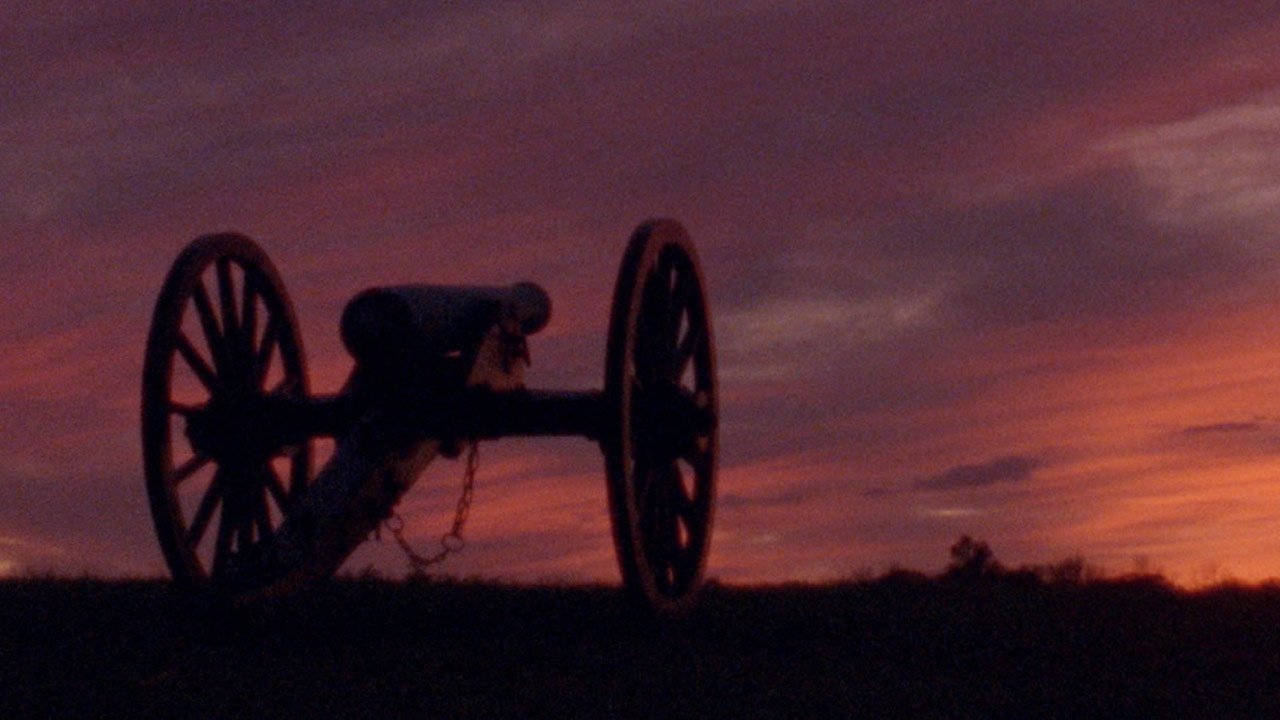
By the spring of 1864 Union dead completely filled the military cemeteries of Washington and Alexandria. Secretary of War Stanton ordered the Quartermaster General, Montgomery Meigs to choose a new site. Meigs was a Georgian who had served under Lee in the peacetime army, but he had developed an intense hatred for all his fellow Southerners who fought against the Union he still served. Without hesitation he picked the grounds of Robert E. Lee's home of Arlington for the new Army cemetery. [...] Now the men Grant was sending to fight Robert E. Lee were being buried in Lee's own front yard. And that yard became Arlington National Cemetery: the Union's most hallowed ground.
All S1
S1 E15Unfinished Business
We believed that it was most desirable that the north should win. We believed in the principle that the Union is indissoluble. We, or many of us at least, also believed that the conflict was inevitable and that slavery had lasted long enough. But we equally believed those who stood against us held just as sacred convictions that were the opposite of ours. And we respected them, as every man with a heart must respect those who give all for their beliefs.
He saw from the very beginning how hard a war it was going to be. And when he said how hard a war it was going to be, he was retired under suspicion of insanity; and then brought back when they decided maybe he wasn't so crazy after all.
We were willing to go anywhere, or to follow anyone who would lead us. We were anxious to flee, fight, or fortify. I have never seen an army so confused and demoralized. The whole thing seemed to be tottering and trembling.
Sherman’s men were still harsher in South Carolina than they had been in Georgia. "Here is where treason began," a private said, "and by God, this is where it shall end."
Fondly do we hope, fervently do we pray, that this mighty scourge of war may speedily pass away. Yet if God wills that it continue until all the wealth piled up by the bondsman’s 250 years of unrequited toil shall be sunk and until every drop of blood drawn with the lash shall be paid by another drawn with the sword, as was said 3,000 years ago, so still must be said: the judgments of the Lord are true and righteous altogether. With malice towards none, with charity for all, with firmness in the right as God gives us to see the right, let us strike on to finish the work we are in; to bind up the nation’s wounds; to care for him who shall have borne the battle, and for his widow and his orphan; to do all which may achieve and cherish a just and lasting peace among ourselves and with all nations.
I never saw him [Abraham Lincoln] again. Of all the men I ever met, he seemed to possess more of the elements of greatness, combined with goodness, than any other.
The conduct of the Southern people appears many times to be truely noble, as exemplified for instance in the defense of Petersburg. Old men with silver locks lay dead in the trenches side by side with mere boys of thirteen or fourteen. It almost makes one sorry to have to fight against people who show such devotion for their homes and their country.
The few men who still carried their muskets had hardly the appearance of soldiers. Their clothes all tattered and covered with mud, their eyes sunken and lusterless. Yet still they were waiting for Gen. Lee to tell them where they were to face the valiant fight.
The country be damned, there is no country, there has been no country, for a year or more. You are the country to these men.
They knew each other. Grant remembered Lee very well. Lee didn't quite remember Grant. That was understandable from the time that they were acquainted, back in the early days. But I think it was the sensitivity that the two men had, for each other, and for the moment. Grant not wanting to get to the point too quickly. Lee bringing him up shortly to the point of why they're together. Lee, dressed in his last good uniform. Grant apologizing that he was rushing from the field and didn't have time to change. The scribe being unable to hold the pen steady and having it taken by another Soldier. That, from Lee's point of view, awful moment, and from Grant's point of view, glorious moment, and yet for the two of them, a sad and quiet moment. And Lee taking his leave, and doffing his hat from Traveler, and riding back to his troops after securing those reasonable terms. It was the beginning of the unification of the country.
If one army drank the joy of victory, and the other the bitter draught of defeat, it was a joy moderated by the recollection of the cost at which it had been purchased, and a defeat mollified by the consciousness of many triumphs. If the victor could recall a Malvern Hill, an Antietam, a Gettysburg, a Five Forks, the vanquished could recall a Manassas, a Fredericksburg, a Chancellorsville, a Cold Harbor.
A crowd of soldiers waited in front of Lee’s tent. "Boys," he told them, "I have done the best I could for you. Go home now, and if you make as good citizens as you have soldiers, you will do well, and I shall always be proud of you. Good-bye, and God bless you all." He turned and disappeared into his tent.
My shoes are gone. My clothes are gone. I’m weary, sick, and hungry. My family have all been killed or scattered. I have suffered all this for my country. I love my country, but if this war is ever over, I’ll be damned if I ever love another country.
"You may forgive us," a surrendering Rebel officer [Henry A. Wise] told Joshua Lawrence Chamberlain after the ceremony at Appomattox, "but we won’t be forgiven. There is a rancor in our hearts, which you little dream of. We hate you, sir."
These quotes come from Wikiquote's The Civil War (documentary) pages and are available under the Creative Commons Attribution-ShareAlike License.