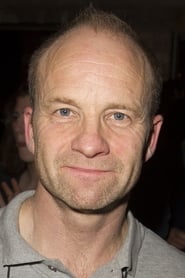
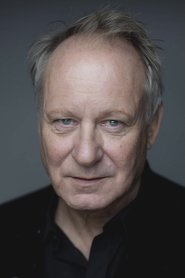
[April 26, 1988: Alone in his apartment in Moscow, Professor Valery Legasov replays his voice on a tape recorder]
What is the cost of lies? It's not that we'll mistake them for the truth. The real danger is that if we hear enough lies, then we no longer recognize the truth at all. What can we do then? What else is left to abandon even the hope of truth and content ourselves instead with stories? In these stories, it doesn't matter who the heroes are. All we want to know is: "Who is to blame?" In this story, it was Anatoly Dyatlov. He was the best choice. An arrogant, unpleasant man, he ran the room that night, he gave the orders... and no friends. Or at least, not important ones. And now Dyatlov will spend the next ten years in a prison labor camp. Of course, that sentence is doubly unfair. There were far greater criminals than him at work. And as for what Dyatlov did do, the man doesn't deserve prison. He deserves death.
[Legasov stops the tape, sips a glass of water, and then restarts the tape from where he left off.]
But instead, ten years for "criminal mismanagement". What does that mean? No one knows. It doesn't matter. What does matter is that, to them, justice was done. Because, you see, to them, a just world is a sane world. There was nothing sane about Chernobyl. What happened there, what happened after, even the good we did, all of it... all of it, madness. Well, I've given you everything I know. They'll deny it, of course. They always do. I know you'll try your best.
[April 26, 1986: Immediately after the explosion, deputy chief engineer Anatoly Dyatlov stands shocked as shift supervisor Aleksandr Akimov calls his name repeatedly and alarms blare]
AAAleksandr Akimov
Comrade Dyatlov? Comrade Dyatlov?!
LTLeonid Toptunov
I don't know.
[Turbine engineer Vyacheslav Brazhnik rushes into the room]
VBVyacheslav Brazhnik
There's a fire in the turbine hall.
The turbine hall... The control system tank. Hydrogen. [addressing Akimov] You and Toptunov, you morons blew the tank.
TToptunov
No, that's not--
This is an emergency, everyone stay calm. Our first priority is to--
[As Dyatlov speaks, foreman Valeriy Perevozchenko runs through the open door in a panic]
VPValeriy Perevozchenko
It exploded!
We know. Akimov, are we cooling the reactor core?
We shut it down, but the control rods are still... They're not all the way in, I disengaged the clutch --
Alright, I'll disconnect the servos from the standby console. [to two other engineers] You two, get the backup pumps running, we need water moving through the core, that is all that matters!
PPerevozchenko
There is no core! It exploded, the core exploded!
[Beat as all the engineers stare at Perevozchenko in disbelief and fear]
He's in shock, get him out of here.
PPerevozchenko
The lid is off. The stack is burning, I saw it.
You're confused, RBMK reactor cores don't explode. Akimov! [picks up the phone to call out]
TToptunov
[whispering, to Akimov] Sasha...
Don't worry, we did everything right. Something... something strange has happened.
TToptunov
Do you taste metal?
[glances at Perevozchenko] Comrade Perevozchenko, what you're saying is physically impossible. The core can't explode. It has to be the tank.
[Perevozchenko wordlessly shakes his head]
[hangs up the phone] We're wasting time. Let's go. Get the hydrogen out of the generators and pump water into the core.
BBrazhnik
What about the fire?
[annoyed; as if it were obvious] Call the fire brigade. [storms out]
[April 26, 1986: Dyatlov meets with plant director Viktor Bryukhanov and chief engineer Nikolai Fomin in a bunker underneath the plant]
[dryly] I take it the safety test was a failure.
We have the situation under control.
Under control? It doesn't look like it's under control.
Shut up, Fomin. [to Dyatlov] I have to tell the Central Committee about this. Do you realize that? I have to get on the phone and tell Maryin, or God forbid Frolyshev, that my power plant is on fire.
No one can blame you for this, Director Bryukhanov
Of course no one can blame me for this. How can I be responsible? I was sleeping. Tell me what happened. Quickly.
We ran the test exactly as Chief Engineer Fomin approved. Unit Shift Chief Akimov and Engineer Toptunov encountered technical difficulties, leading to an accumulation of hydrogen in the control system tank. It, regrettably, ignited, damaging the plant and setting the roof on fire.
[Bryukhanov looks to Fomin]
The tank is quite large, yes. It's the only logical explanation. Of course, Deputy Chief Engineer Dyatlov was directly supervising the test, so he would know best.
A hydrogen tank, fire...Reactor?
We're taking measures to ensure a steady flow of water through the core.
Obviously, down here it's nothing, but in the reactor building, I'm being told 3.6 roentgen per hour
Well, that's not great, but it's not horrifying.
Not at all. From the feedwater, I assume?
[Dyatlov nods]
We'll have to limit shifts to six hours at a time, but otherwise...
The dosimetrists should be checking regularly. Have them use the good meter, from the safe. Right, I'll call Maryin. Have them wake up the local committee, there'll be orders coming down.
I dropped the rods from the other panel.
AAAleksandr Akimov
They're still up.
They're still only a third of the way in, I don't know why. I already sent the trainees down to the reactor hall to lower them by hand.
LTLeonid Toptunov
I can't get through to Khodemchuk, the lines are down.
Fuck the phones and fuck Khodemchuk. Are the pumps on or not?
BSBoris Stolyarchuk
My control panel's not working. I tried calling for the electricians--
I don't give a shit about the panel! I need water in my reactor core! Get down there and make sure those pumps are on. Now!
[several engineers leave the control room as Dyatlov sits down at a desk]
What does the dosimeter say?
Ah, 3.6 roentgen, but that's as high as the meter--
3.6. Not great, not terrible.
[quietly, to Toptunov] We did everything right.
[April 26, 1986: Meeting in the power plant office, engineer Anatoly Sitnikov reports high radiation in reactor 4]
What's wrong with you? How'd you get that number from feedwater leaking from a blown tank?
ASAnatoly Sitnikov
You don't.
Then what the fuck are you talking about?
SSitnikov
I... [clears throat] I walked around the exterior of building 4. I think there's graphite on the ground in the rubble.
You didn't. YOU DIDN'T! Because it's NOT THERE!
What, are you suggesting the core... what? Exploded?
SSitnikov
[almost a whisper] Yes.
Sitnikov, you're a nuclear engineer. So am I. So please tell me how an RBMK reactor core explodes. Not a meltdown, an explosion. I'd love to know.
SSitnikov
I... [stammers] I don't see how it could explode. [Fomin looks satisfied] But it did.
[pounds the table, swaying on his feet] Enough! I'll go up to the vent block roof. From there, you can look right down into reactor building 4. I'll see it with my own... with my own eyes. [vomits on the table] I apologize. [collapses]
[Meeting of the plant's executive committee]
ZZharkov
I wonder how many of you know the name of this place. We all call it "Chernobyl", of course. What is its real name?
The Vladimir I. Lenin Nuclear Power Station.
ZZharkov
Exactly. Vladimir I. Lenin. [points to the image of Lenin on the nearby wall] And how proud he would be of you all tonight. Especially you, young man, the passion you have for the people. For is that not the sole purpose of the apparatus of the State? Sometimes we forget. Sometimes we fall prey to fear. But our faith in Soviet socialism will always be rewarded. Now the State tells us the situation here is not dangerous. Have faith, comrades. The State tells us it wants to prevent a panic. Listen well! It's true, when the people see the police, they will be afraid. But it is my experience that when the people ask questions that are not in their own best interest, they should simply be told to keep their minds on their labor and leave matters of the State to the State. We seal off the city. No one leaves. And cut the phone lines. Contain the spread of misinformation. That is how we keep the people from undermining the fruits of their own labor. Yes, comrades... we will all be rewarded for what we do here tonight. This is our moment to shine.
[Dmitri wakes Ulana up at her lab, 7 hours after the explosion]
DDmitri
You work too hard.
DDmitri
Oh, they refused to come in.
DDmitri
I work too hard. It's boiling in here. [opens a window. A radiation alarm goes off. Dmitri immediately closes the window and then checks the alarm's reading.] Eight millirontgen. Leak?
No, it would've gone off before. It's coming from outside.
[Ulana grabs a swab, opens a window, gathers a sample of dust from the window's outside, then closes the window and takes the swab sample to a machine to get a reading. Returns with the reading]
Iodine-131. It's not military, it's uranium decay: U-235.
DDmitri
Reactor fuel? [Ulana goes to a phone] Ignalina, maybe? 240 km away?
[calls the Ignalina power station] Yes, this is Ulana Khomyuk, with the Institute of Nuclear En...looking for...[listens to the person on the phone] Alright, stay calm- [gets interrupted by the other person on the line before getting hung up on] They're at 4. It's not them. Who's the next closest?
DDmitri
Chernobyl, but that's not possible. They're 400 km away.
Well, then that's too far for 8 millirontgen. They'd have to be split open. Maybe they know something. [Calls Chernobyl, and takes a pill, passing the bottle to Dmitri] Iodine.
DDmitri
Could it be a waste dump?
We'd be seeing other isotopes.
DDmitri
Nuclear test? Uh, a new kind of bomb?
We'd have heard. That's what half of our people work on here.
DDmitri
Something with the space program, like a satellite, or...
[looks up] No one's answering the phone.
[As Valery Legasov and Boris Shcherbina make their way to Chernobyl in a helicopter...]
How does a nuclear reactor work?
It's hardly a simple answer.
Of course, you presume I'm too stupid to understand. So I'll restate: Tell me how a nuclear reactor works, or I'll have one of these soldiers throw you out of the helicopter.
A nuclear reactor makes electricity with steam. The steam turns a turbine which generates electricity. Where a typical power plant makes steam by burning coal, a nuclear plant...
[Legasov tries to find a pen in his pocket to draw a diagram. Scherbina hands his pen and a scratch paper to Legasov]
[Draws diagram] In a nuclear plant, we use something called fission. We take an unstable element like Uranium-235, which has too many neutrons. A neutron is, uh—
[Impressed] Yes, the bullet. So, bullets are flying off of the uranium. Now...if we put enough uranium atoms close together, the bullets from one atom will eventually strike another atom. The force of this impact splits that atom apart, releasing a tremendous amount of energy, fission.
[Exhales] Ah, yes. The neutrons are actually traveling so fast we call this "flux"—it's relatively unlikely that the uranium atoms will ever hit one another. In RBMK reactors, we surround the fuel rods with graphite to moderate—slow down—the neutron flux.
Good. [Takes his pen back] I know how a nuclear reactor works. Now I don't need you.
[Legasov and Shcherbina's helicopter approaches the Chernobyl plant]
[Sees the reactor, horrified] What have they done?
I don't have to. Look. That's graphite on the roof. The whole building's been blown open. The core's exposed!
I can't see how you can tell that from here.
Oh, for God's sakes! Look at that glow! That's radiation ionizing the air!
Well, if we can't see, we don't know. [to the pilot] Get us directly over the building!
...directly over an open reactor...
I didn't ask your advice!
...we'll be dead within a week! Dead!
Get us over that building, or I'll have you shot!
[to the pilot] If you fly directly over that core, I promise you, by tomorrow morning, you'll be begging for that bullet! [the pilot considers this, and turns away from the Chernobyl plant]
[Inside a military jeep, as Fomin and Bryukhanov prepare to meet Shcherbina; the Soviet military has arrived in force, led by Colonel-General Vladimir Pikalov]
It's overkill. Pikalov's showing off to make us look bad.
It doesn't matter how it looks. Shcherbina is a pure bureaucrat, as stupid as he is pigheaded. We'll tell him the truth in the simplest terms possible. We'll be fine. [Both exit the jeep] Pikalov!
[General Pikalov joins in with Fomin and Bryukhanov to welcome Shcherbina. Legasov is standing at a distance as Shcherbina, alone, is saluted by Pikalov]
Comrade Shcherbina, Chief Engineer Fomin, Colonel-General Pikalov, and I are honored at your arrival.
Naturally, we regret the circumstances of your visit, but as you can see, we are making excellent progress in containing the damage. [Pulls out his notepad] We have begun our own inquiry into the cause of the accident, and I have a list of individuals who we believe are accountable.
[Shcherbina reads through the note and gestures Legasov to join them]
Professor Legasov, I understand you've been saying dangerous things.
Very dangerous things. Apparently, our reactor core exploded. Please, tell me how an RBMK reactor core explodes.
I'm not prepared to explain it at this time.
As I presumed, he has no answer.
It's disgraceful, really. To spread disinformation at a time like this.
[Legasov, in a tense situation, says nothing and looks to Shcherbina]
[Notices Legasov and turns to Bryukhanov] Why did I see graphite on the roof?
[Bryukhanov and Fomin's smug expressions dissolve.]
Graphite is only found in the core, where it's used as a—neutron flux moderator. Correct?
[beat] Fomin, why did the Deputy Chairman see graphite on the roof?
Well, that—that can't be. Comrade Shcherbina, my apologies, but graphite... that's not possible. Perhaps y—you saw burnt concrete.
Now there you made a mistake. Because I may not know much about nuclear reactors, but I know a lot about concrete.
I understand. [Points to Legasov] You think Legasov is wrong. How shall we prove it?
GPGeneral Pikalov
Our high-range dosimeter just arrived. We could cover one of our trucks with lead shielding, mount the dosimeter on the front.
[all of them look at Legasov]
Have one of your men get as close to the fire as he can. Give him every bit of protection you have. But understand that even with lead shielding, it may not be enough.
PPikalov
[grimly] Then I'll do it myself.
[Colonel-General Pikalov returns from driving a high-level dosimeter close to the fire.]
PPikalov
It's not three roentgen. It's fifteen thousand.
[Legasov closes his eyes.]
[Scherbina just looks at him, and he shuts up instantly.]
[Turns to Legasov] What does that number mean?
It means the core is open. It means the fire we're watching with our own eyes is giving off nearly twice the radiation released by the bomb in Hiroshima. And that's every single hour. Hour after hour, [looks at his watch] 20 hours since the explosion, so forty bombs worth by now. Forty-eight more tomorrow. And it will not stop. Not in a week, not in a month. It will burn and spread its poison until the entire continent is dead.
[Turns to the soldiers] Please escort Comrades Bryukhanov and Fomin to the local Party headquarters. [Turns to Bryukhanov] Thank you for your service.
[As he's being taken away] Dyatlov was in charge. It was Dyatlov!
Tell me how to put it out.
PPikalov
We'll use helicopters. We'll drop water on it like a forest fire—
No, no, no. You don't understand. This isn't a fire. This is a fissioning reactor core burning at over 2,000 degrees. The heat will instantly vaporize the water or worse—
[Sighs] You are dealing with something that has never occurred on this planet before. [Shcherbina begins to speak] Boron. Boron and sand. It'll create problems of its own, but I—I don't see any other way. Of course, it's going to take thousands of drops, because you can't fly the helicopters directly over the core, so most of it is going to miss.
[Scoffs] Well, I can't be—
Five thousand tons. And obviously, we're going to need to evacuate an enormous area—
Never mind that. Focus on the fire.
I am focusing on the fire. The wind, it's carrying all that smoke, all that radiation. At least evacuate Pripyat. It's three kilometers away.
That's my decision to make.
Is it or is not your decision—
I'm in charge here! This will go much easier if you talk to me about the things you do understand and not about the things you do not understand. [Walks back to the tent]
I'm going to get you 5,000 tons of sand and boron.
[Polissya hotel, Pripyat: Helicopters dropping sand and boron to extinguish the fire in the Chernobyl plant]
It's been smooth. Twenty drops. [notices Legasov's expression] What?
There are fifty thousand people in this city.
Professor Ilyin, who's also on the commission, says the radiation isn't high enough to evacuate.
Well, he's a medical doctor. If he says it's safe, it's safe.
[impatiently] Yes, we are, and we'll be dead in five years! [Shcherbina looks shocked] I'm sorry, I'm... I'm sorry.
[sits in stunned silence as the phone starts to ring; after several seconds, he answers it] Shcherbina. [listens] Thank you. [hangs up] A nuclear plant in Sweden has detected radiation and identified it as a byproduct of our fuel. The Americans took satellite photos. The reactor building, the smoke, the fire. The whole world knows. The wind has been blowing toward Germany. They're not letting children play outside... in Frankfurt. [glances outside at the children playing]
[The Kremlin, Moscow: Legasov and Ulana Khomyuk explain the consequences of a nuclear meltdown with full water tanks]
When the lava enters these tanks, it will instantly superheat and vaporize approximately 7,000 cubic meters of water, causing a significant thermal explosion.
GGorbachev
How significant?
We estimate between two and four megatons. Everything within a thirty-kilometer radius will be completely destroyed, including the three remaining reactors at Chernobyl. The entirety of the radioactive material in all of the cores will be ejected at force and dispersed by a massive shock wave, which will extend approximately two hundred kilometers and likely be fatal to the entire population of Kiev, as well as a portion of Minsk. The release of radiation will be severe, and will impact all of Soviet Ukraine, Latvia, Lithuania, Byelorussia, as well as Poland, Czechoslovakia, Hungary, Romania, and most of East Germany.
GGorbachev
What do you mean, "impact"?
For much of the area, a nearly permanent disruption of the food and water supply, a steep increase in the rates of cancer and birth defects. I don't know how many deaths there will be, but many. For Byelorussia and the Ukraine, "impact" means completely uninhabitable for a minimum of one hundred years.
GGorbachev
[visibly shaken] There are more than fifty million people living in Byelorussia and Ukraine.
GGorbachev
And how long before this happens?
Approximately 48 to 72 hours. But we may have a solution. We can pump the water from the tanks. Unfortunately, the tanks are sealed shut by a sluice gate, and the gate can only be opened manually from within the duct system itself. So we need to find three plant workers who know the facility well enough to enter the basement here, find their way through all these duct ways, get to the sluice gate valve here, and give us the access we need to pump out the tanks. Of course, we will need your permission.
GGorbachev
My permission for what?
Um, the water in these tanks... the level of radioactive contamination --
They'll likely be dead in a week.
We're asking for your permission to... kill three men.
[Tense silence.]
GGorbachev
Well, Comrade Legasov... all victories inevitably come at a cost.
[Legasov and Shcherbina faces incredulous workers as they ask for volunteers in a suicidal mission to open the sluice gate valve]
NWNuclear Worker
Now you want us to swim underneath a burning reactor. Do you even know how contaminated it is?
I... I don't have an exact number.
NWNuclear Worker
You don't need to have an exact number to know if it will kill us. But you can't even tell us that. Why should we do this? For what, for four hundred rubles?
You'll do it because it must be done. You'll do it because nobody else can. And if you don't, millions will die. If you tell me that's not enough I won't believe you. This is what has always set our people apart. A thousand years of sacrifice in our veins. And every generation must know its own suffering. I spit on the people who did this. And I curse the price that I have to pay. But I'm making my peace with it. Now you make yours. Go into that water. Because it must be done.
[Silence.]
AAAlexei Ananenko
[stands] Ananenko.
VBValeri Bespalov
[stands] Bespalov.
BBBoris Baranov
[stands] Baranov.
What will happen to our boys?
The divers, the firefighters, the men in the control room. What does the radiation do to them precisely?
At the levels some of them were exposed? Ionizing radiation tears the cellular structure apart. The skin blisters, turns red, then black. This is followed by a latency period. The immediate effects subside. The patient appears to be recovering. Healthy, even. But they aren't. This usually only lasts for a day or two.
Then the cellular damage begins to manifest. The bone marrow dies, the immune system fails, the organs and soft tissue begin to decompose. The arteries and veins spill open like sieves, to the point where you can't even administer morphine for the pain, which is… unimaginable. And then three days to three weeks, you are dead. That is what will happen to those boys.
Well, we've...We've gotten a steady dose, but not as much of it. Not strong enough to kill the cells, but consistent enough to damage our DNA. So, in time, cancer. Or aplastic anemia. Either way, fatal.
[beat] Well, in a sense, it would seem we've gotten off easy then, Valery.