
I am here in part to secure my own future. I will not apologize for that.
All S1
S1 E15Unfinished Business
[about the slaves] You think if you refrain from beating them, it's any better? It isn't the violence. It isn't the labor or the hunger or the heat or the chains. You know what those men fear right now? It's the unknown. The lash that comes from nowhere for reasons never explained. A visit from the taskmaster in the dead of night. But I remember that fear.
The first moment I saw the gold on the beach, I thought, 'My God, the things I'm going to build with this.' A city, alive in a place it has no right to be, in defiance of all reason and refusing to be dislodged, but growing. A place that, fifty years hence and when I'm long gone, would force the world to acknowledge Jack Rackham was here.
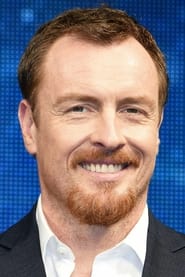
I can walk away from this fight if I just sign my name beneath a solemn oath never again to do violence against it. No. Not after all it has taken from me. I will do great violence against that thing. They say they will pardon us all, but I say that to offer to pardon something one fears is the act of a coward. To offer them in volume suggests that their fear of us is becoming unmanageable. That we have shown them what we are and it terrifies them.
When I was very small, I would sneak out of the slave quarters at night to the main house. I would stand outside the window to the parlor. I would stand amongst the heat and the bugs and the filth on my toes to see inside. Inside that house was a little girl, my age, with the most beautiful skin. I watched her dance while her father played music and her mother sewed. I watched her read and eat and sing and sleep, kept safe and warm and clean by her father. My father. The things it took to make that room possible, they were awful things. But inside that room was peace. That is what home is to me.
They pledged to follow me when they thought I was alive. They turned when they thought I was gone. So I will come back from the dead and lay claim to what I am owed.
MQMaroon Queen
Let's say by some miracle we could dislodge the British from Nassau. I could not possibly hope to defend it with my numbers.
Your numbers? For every man in your camp, there are thousands somewhere in the West Indies living under the same yoke, chained in fields, pressed on ships, sold into indenture. When they see a sitting governor, protected by His Majesty's Navy, deposed by an alliance of pirates and slaves, how many consider joining that fight? How many thousands of men will flock to Nassau, join your ranks, and help you defend it? What does a colonial power do when the men whose toil powers it lay down their shovels, take up swords, and say 'no more'? Bring down Nassau. Maybe bring it all down.
[to Rogers] My father was a tailor in Leeds. As was his father, and his father's father. Time was, if a man on the Avondale Road asked where he might find the finest clothes in northern England, he was pointed toward the shop of a man named Rackham. Then the men who sell wool decided they'd prefer not to compete with the men who imported fine cotton. And as the men who sell wool have the ears of the men who make laws, an embargo is enacted to increase profits, and calico disappears. And my father's business that he inherited from his father and his father's father begins to wither and die. And my father suffers the compound shame of financial failure seen through the eyes of his son, and descended into drink. I'd sit beside him as a boy at the Sunday service as he shouted at the pastor, at the altar--at anyone who'd listen, really--at the injustice of it all. And I'd put his arm over my shoulder as the insults began, help carry him out of the church. God, the insults. At his funeral, our neighbors were kind enough to whisper them rather than call them out loud. So, I set to work, determined to rebuild what had been taken away. I was thirteen years old, but I was determined... until a man arrived at my door claiming to hold debts belonging to my father. Debts accumulated as my father drank. Debts he claimed that now belonged to me. Debts I could not possibly have hoped to repay. Debts over which this man would have seen me imprisoned--imprisoned in a place where the debts would have been discharged only through hard labor. Hard labor with no wages, working at--wait for it--the production of textiles. 'You people, incapable of accepting the world as it is,' says the man to whom the world handed everything. If no Anne, if no rescue, if this is defeat for me, then know this: you and I were neck and neck in the race right till the end. But Jesus, did I make up a lot of ground to catch you.
(February 12, 2017)
MMadi
When life itself seems lunatic, who knows where madness lies? Perhaps to be too practical is madness. To surrender dreams — this may be madness. Too much sanity may be madness — and maddest of all: to see life as it is, and not as it should be
[to Anne] I remember when I first met Eleanor, how stunned I was. A woman who spoke the way she did, cu had no fear of the world or the men who reigned over it. When I became her lover, I watched the decisions she made and resolved to learn from them. When I became her rival, I watched the mistakes she made and resolved never to repeat them. But at the end, when I felt I had surpassed her in every way, it seemed as though there was something she was still trying to say to me. Surrendering everything she had sacrificed so dearly for, because it would have come at the expense of someone she loved. She was trying to tell me, I just could not hear her, about what was truly important. I said no to Marion Guthrie's plan, despite having no alternative and at the risk of losing the entire endeavor, because I refuse to situate a man in a position where he might interfere one day with my ability to repair things with you. You are the bravest person I have ever known. The truest person I have ever known. And I betrayed you and it sickens me. I am so sorry for working so hard to protect the wrong things. For failing to see that there is nothing important that does not include you.
RRogers
Do not make the same mistake I did. Do the deal.
MMadi
The voice you hear in your head? I imagine I know who it sounds like, as I know Eleanor wanted those things. But I hear other voices. A chorus of voices. Multitudes. They reach back centuries. Men and women and children who lost their lives to men like you. Men and women and children forced to wear your chains. I must answer to them. And this war, their war, Flint's war, my war, it will not be bargained away to avoid a fight. To save John Silver's life. Or his men's. Or mine. And you believe what you will, but it was neither I, nor Flint, nor the Spanish raider who killed your wife. That you did.
[to Silver] This is how they survive. They paint the world full of shadows and then tell their children to stay close to the light. Their light. Their reasons. Their judgments. Because in the darkness, there be dragons. But it isn't true. We can prove that it isn't true. In the dark there is discovery. There is possibility. There is freedom in the dark once someone has illuminated it.
A story is true, a story is untrue. As time extends, it matters less and less. The stories we want to believe, those are the ones that survive, despite upheaval and transition and progress. Those are the stories that shape history. And then what does it matter if it was true when it was born? It's found truth in its maturity. Which if a virtue in man ought to be no less so for the things men create.
What's it all for if it goes unremembered? It's the art that leaves the mark. But to leave it, it must transcend. It must speak for itself. It must be true.
These quotes come from Wikiquote's Black Sails pages and are available under the Creative Commons Attribution-ShareAlike License.